


Air Peace Chairman, Allen Onyema, has called for a fixed passenger-funded Aviation Development Levy after a bird strike on one of the airline’s aircraft left the carrier with a $1.85 million repair bill, underscoring the costly consequences of inadequate aviation infrastructure.
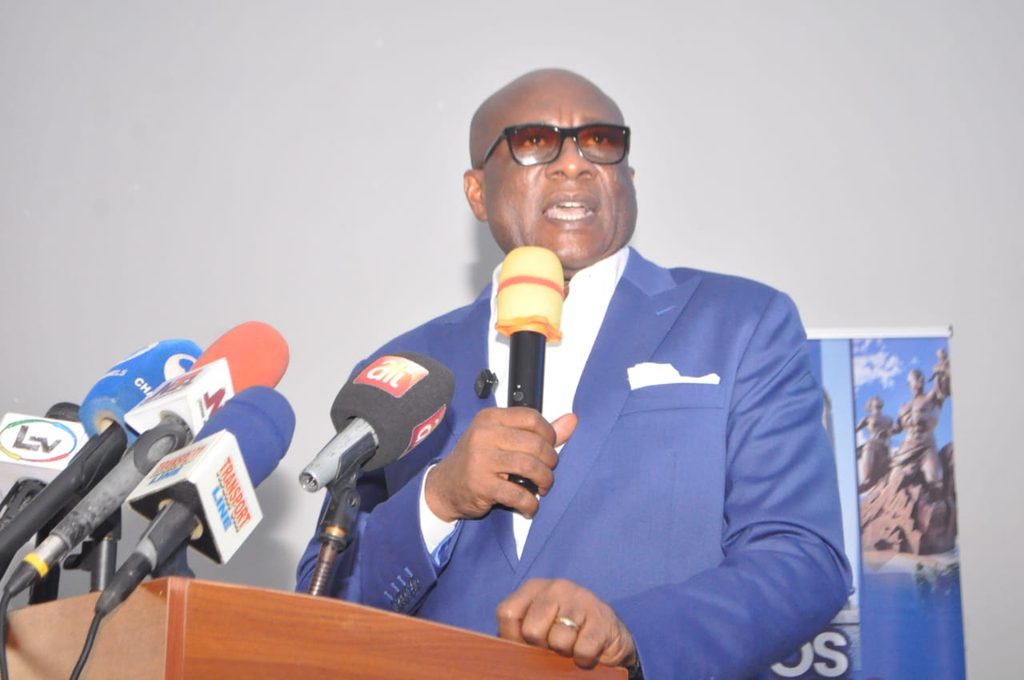
Speaking on Thursday, September 10, 2026, at the 30th Annual Conference of the League of Airport and Aviation Correspondents (LAAC) in Lagos, Onyema said aviation agencies must be adequately funded to tackle infrastructure and safety challenges, including bird hazards at airports.
He disclosed that an Air Peace aircraft involved in a bird strike in Abuja last week suffered damage to its inlet cowling, with the foreign original equipment manufacturer (OEM) subsequently presenting the airline with an invoice of $1.852 million for repairs.
“The airport managers don’t have money to buy equipment to chase birds. We shouldn’t blame them – they need money. But you shouldn’t blame the airlines when we start having bird strikes”, Onyema said.
“We had one in Abuja last week. The inlet cowling was damaged, and the OEM came to us with an invoice of $1,852,000, almost $2 million. How many passengers are we carrying on that aircraft to recover that? Remember, one bird strike takes away the operations of an aircraft for the whole year”.
‘Keep Aviation Revenues Within Aviation’
Onyema attributed part of the sector’s infrastructure challenges to the statutory remittance of revenues generated by aviation agencies to the Federal Government.
He argued that agencies such as the Federal Airports Authority of Nigeria (FAAN) and the Nigeria Civil Aviation Authority (NCAA) should be allowed to retain a greater proportion of their revenues for investment in infrastructure, equipment and safety systems.
According to him, the airlines are not opposed to funding government agencies but want revenues generated within the aviation sector to be channelled back into its development.
“The airlines of Nigeria, we are not against funding government agencies. We support them,” he said.
“In fact, we call on the government to allow revenues coming to these agencies to remain for the development of the industry. The remittance of over 25 per cent or 50 per cent is hurting those agencies too.”
He warned that continued underfunding would lead to infrastructure decay, leaving airlines to bear the financial consequences of deficiencies they have little control over.
“The retention of a good percentage of whatever is generated through these airlines should remain with those government agencies for them to actually develop the industry, without which there will be infrastructural decay. And when this happens, airlines end up taking the blame.”
Onyema Targets Five Per Cent TSC
The Air Peace chairman also renewed his criticism of the five per cent Ticket Sales Charge (TSC), proposing its replacement with a fixed and transparent Aviation Development Fund paid by passengers.
He argued that applying a percentage charge to airline ticket revenue puts additional pressure on operators whose businesses are already burdened by high borrowing and operating costs.
“When we talk about five per cent, we’ve been criticising this since time immemorial, but nobody listens. When you take five per cent of a business I borrowed money at 30 per cent interest to run, you become an overbearing partner,” he said.
Instead, Onyema proposed a flat charge that passengers would clearly understand as a contribution towards aviation development.
“If you put a flat rate today; say N5,000 or N7,000 and announce to the flying public that this is an ‘Aviation Development Fund,’ it is easy, transparent, and collects more money for the agencies without choking the airline’s working capital,” he said.
Speaking against the backdrop of the conference theme, “Towards a Sustainable Aviation Industry: Balancing Government Revenue Demands with Sector Growth,” Onyema maintained that aviation revenues should be deployed to strengthen the infrastructure and safety systems required for sustainable industry growth.
He said better-funded aviation agencies would be in a stronger position to address hazards such as bird strikes, improve airport infrastructure and ultimately reduce the operational and financial burdens that airlines currently bear.