



The Nigerian Maritime Administration and Safety Agency (NIMASA) has stepped up intelligence-led maritime enforcement with a special operation designed to strengthen compliance, improve vessel monitoring and support revenue generation across Nigeria’s maritime domain.
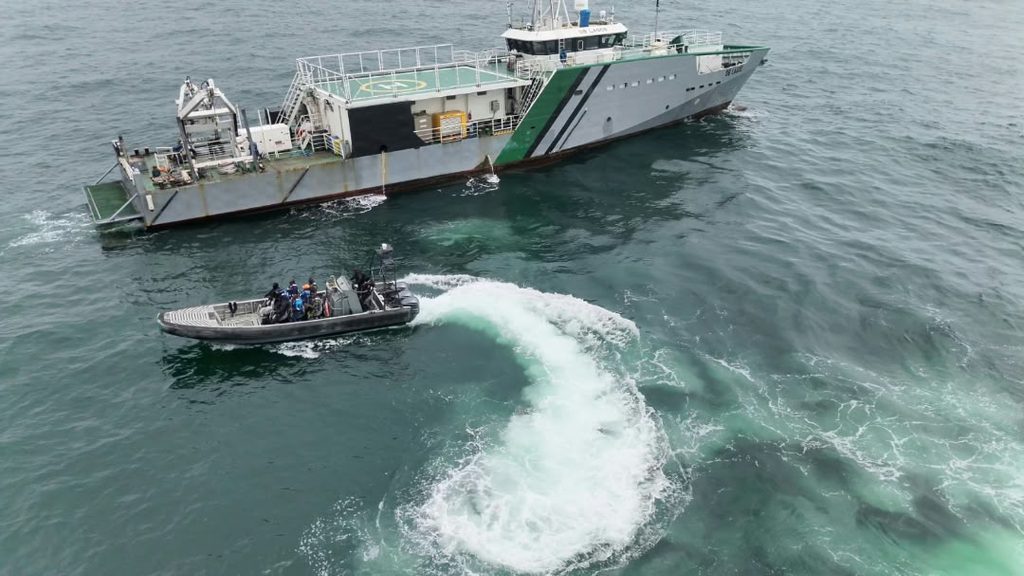
Code-named Operation Blue-Green, the coordinated exercise deployed assets of the Integrated National Security and Waterways Protection Infrastructure, popularly known as the Deep Blue Project, alongside NIMASA’s maritime security units across key operational areas in Lagos.
The operation combined intelligence gathering, analysis and target development with coordinated enforcement at sea, including the deployment of a specialised intelligence capability within the NIMASA Deep Blue structure and its Command, Control, Communications, Computers and Intelligence System (C4i).
The new capability is designed to improve the identification, assessment and prioritisation of vessels of interest, enabling enforcement teams to make more targeted interventions while receiving real-time intelligence support during operations.
Blue-Green to become recurring operation
Director General of NIMASA, Dr. Dayo Mobereola, said the outcome of the exercise had prompted the agency to formalise Operation Blue-Green as a recurring intelligence-led enforcement model.
Mobereola said similar operations would progressively be extended to other maritime regions, including Port Harcourt, Calabar and Warri, subject to operational readiness and intelligence priorities.
“Following the outcome of the operation, we at NIMASA will formalise Blue-Green as a recurring intelligence-led enforcement model and progressively expand similar operations to other maritime regions, including Port Harcourt, Calabar and Warri, in line with operational readiness and intelligence priorities”, he said.
He said the deployment of multiple enforcement platforms was also intended to deter criminal activities on Nigerian waters, while commending the armed forces for their cooperation during the exercise.
“This deployment of multiple enforcement platforms is to serve as deterrent to anybody with criminal intentions. We are glad with the level of cooperation from the armed forces”, Mobereola stated.
Vessels screened for compliance
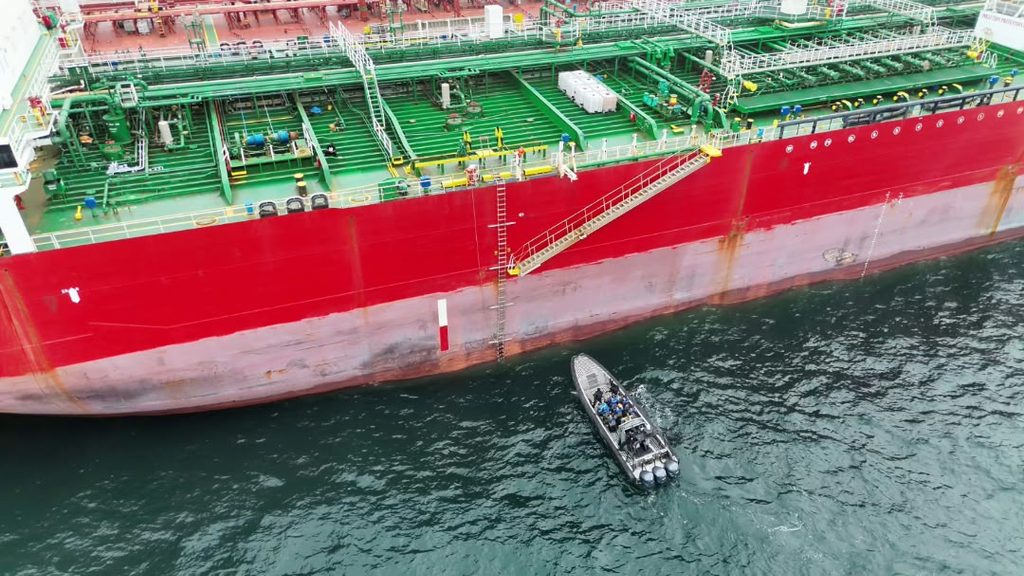
During the operation, several vessels were boarded and inspected as part of document verification and compliance screening.
The inspections covered statutory certification, cargo and voyage documentation, surcharge obligations and compliance with the Cabotage regime.
NIMASA said the operation demonstrated the value of integrating its enforcement capabilities with C4i intelligence and Deep Blue maritime assets.
According to the agency, the approach provides a foundation for more structured and sustained intelligence-led enforcement, with the broader objective of strengthening maritime compliance while supporting improved revenue generation.