




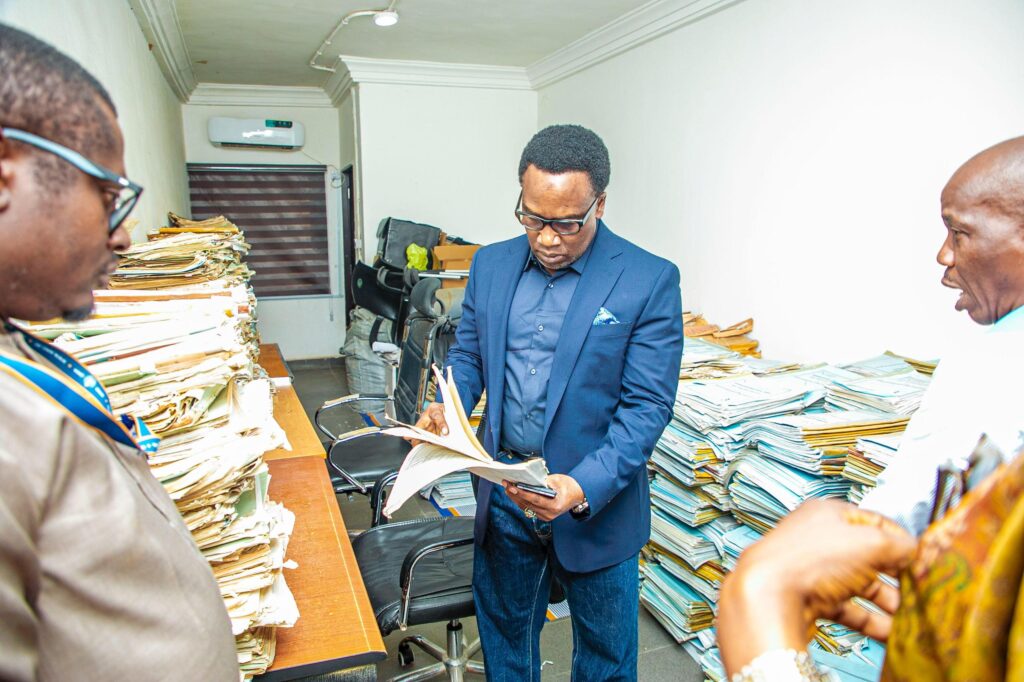
The Director General and Chief Executive Officer of the Nigerian Meteorological Agency (NiMet), Professor Charles Anosike, has inspected and commissioned the Agency’s Meteorological Data Rescue Project, marking a significant milestone in preserving Nigeria’s climate heritage and strengthening national scientific capacity.
The initiative is designed to secure invaluable historical weather and climate records, some dating back to the 19th century that were previously at risk of permanent loss. These include handwritten observation logs, ship records, and early instrumental data that extend Nigeria’s documented climate history beyond the digital era and help close critical gaps in existing archives.
Through the systematic recovery, preservation, and digitisation of fragile paper records and legacy media, the project safeguards Nigeria’s analogue climate history while ensuring long-term accessibility. The rescued datasets will enhance climate modelling, improve weather forecasting, support disaster risk reduction, and inform evidence-based policymaking, providing vital historical context for understanding current and future climate patterns.
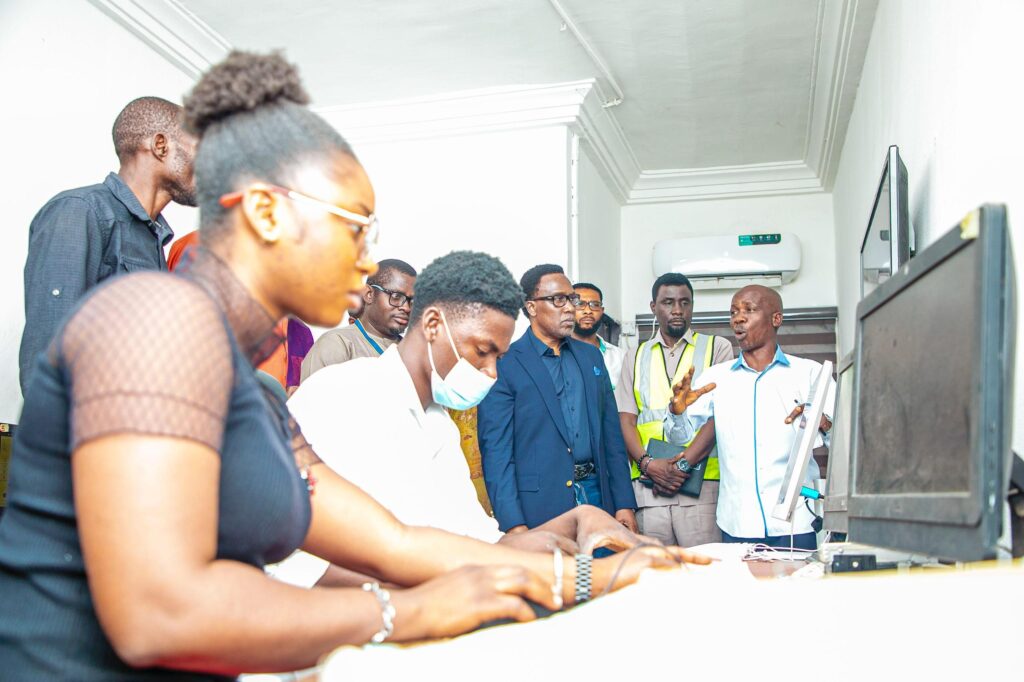
Speaking during the inspection and commissioning, Professor Anosike described the project as a strategic investment in Nigeria’s future, noting that it transforms historical records into a robust scientific foundation for climate resilience, sustainable development planning, and advanced meteorological services.
The Data Rescue Project aligns with World Meteorological Organization (WMO) best practices and reflects NiMet’s commitment to modernisation and digital transformation under the Renewed Hope Agenda of President Bola Ahmed Tinubu, GCFR. It also strengthens Nigeria’s contribution to global climate science by making historical atmospheric data available for contemporary analysis and decision-making.
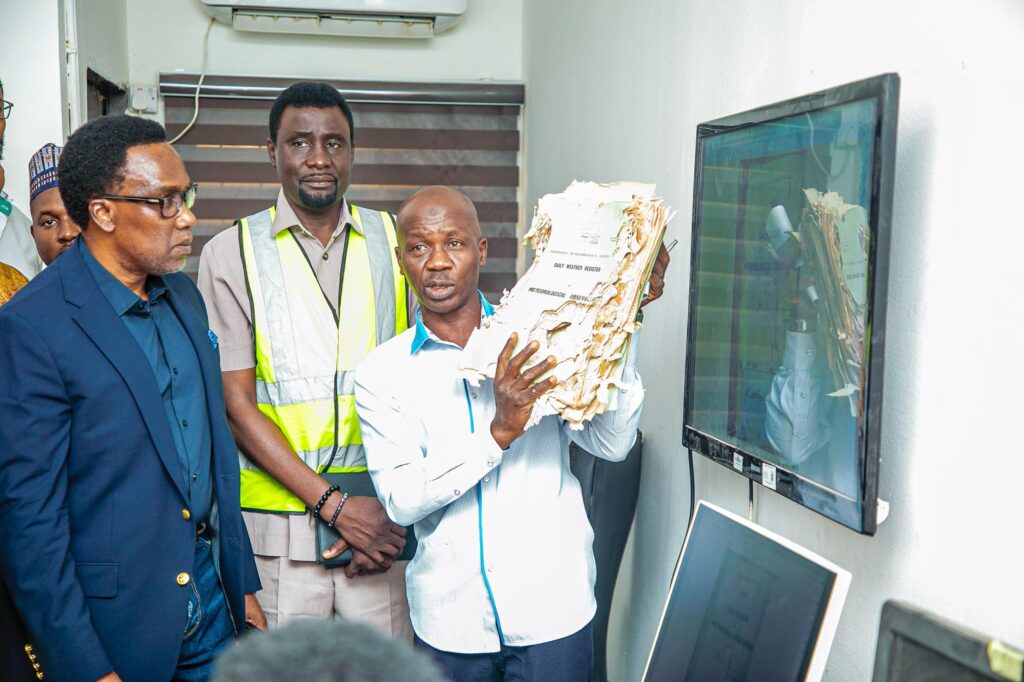
With the successful commissioning of the project, NiMet has reinforced its leadership in climate data stewardship and digital preservation, demonstrating how science and technology can be harnessed to support national development and long-term climate resilience.