





The Nigerian Meteorological Agency (NiMet), in partnership with Tomorrow.io, has commenced a five-day co-design workshop aimed at refining the Digital Climate Advisory Service (DCAS) Decision Tree to enhance climate resilience and boost productivity among Nigerian farmers.
The workshop, holding from 12 to 16 February 2026, marks a significant milestone in the strategic collaboration between both institutions to deliver data-driven, farmer-focused climate solutions. Central to the engagement is the integration of farmer feedback and expert input into the DCAS framework, ensuring that climate advisories are practical, timely and tailored to real farming conditions.
A major focus of the session is the development of a robust Crop Decision Tree (CDT) framework. The exercise brings together key stakeholders from the Federal Ministry of Agriculture and Food Security, the Federal Ministry of Livestock Development, and farmer development groups — each playing a critical role in aligning scientific forecasts with agricultural realities.
The collaborative approach is designed to integrate NiMet’s localized 2026 Seasonal Climate Prediction (SCP) into specific farming activities, transforming seasonal forecasts into clear, actionable advisories.
When operational, the system will generate automated guidance for various climate scenarios, including prolonged dry spells, delayed rainfall onset, and early seasonal rains. The advisories will enable farmers to take timely decisions on planting, irrigation and harvesting, reducing exposure to weather-related risks while strengthening agricultural productivity and resilience.
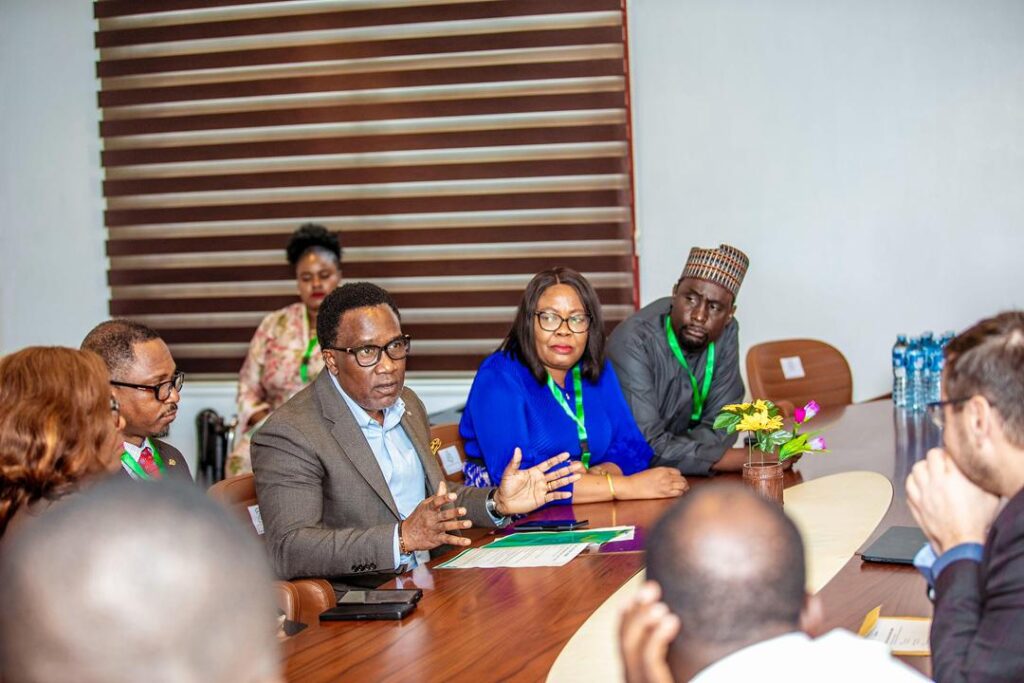
Speaking during the workshop, Brian Miranda, CEO representative of Tomorrow.io, commended the Director General and Chief Executive Officer of NiMet, Prof. Charles Anosike, for his strategic leadership and forward-thinking vision.
Miranda noted that NiMet’s embrace of artificial intelligence in meteorology positions it among leading National Hydrometeorological Services (NHMS) in Africa, particularly in strengthening early warning systems for extreme weather events.
“NiMet’s adoption of AI-driven meteorological solutions significantly enhances early warning capabilities. This not only improves forecast accuracy but strengthens the agency’s ability to protect communities and support climate-sensitive sectors like agriculture”, he said.
In his remarks, Anosike described the Digital Climate Advisory Service as a transformative initiative for Nigeria’s agricultural sector.
“This initiative is a game changer. It is about translating weather information into simple, practical advice that farmers can use every day. Our goal is to ensure that climate information directly supports decision-making at the farm level”, he stated.
He emphasised that the advisory service is intentionally designed to be clear, accessible and easy to understand, enabling farmers to respond effectively to evolving weather patterns.
The workshop will continue with an intensive technical deep-dive session, during which participants will collaboratively design the DCAS Decision Tree.
The tool will address key challenges faced by crop and livestock farmers by combining meteorological expertise with on-the-ground realities, ultimately delivering targeted guidance for climate-smart agriculture.
Through this initiative, NiMet and Tomorrow.io are advancing a digitally enabled climate advisory ecosystem that strengthens resilience, supports food security, and reinforces Nigeria’s capacity to adapt to a changing climate.