




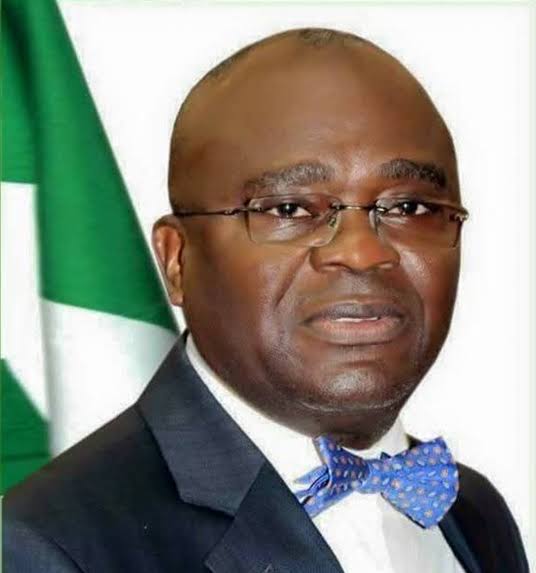
The Managing Director of the Nigerian Railway Corporation (NRC), Dr. Kayode Opeifa, has called for urgent and deliberate efforts to deepen rail connectivity to Nigeria’s seaports, warning that ongoing maritime reforms may yield only limited results without efficient rail integration.
Speaking at the Quarterly Stakeholders Engagement of the Nigerian Ports Consultative Council, where he delivered a keynote address, Opeifa stressed that deep sea port investments must be matched with robust rail infrastructure to drive efficiency in the nation’s freight and logistics ecosystem.
Addressing industry players, he acknowledged improved collaboration between the NRC and port authorities, noting that significant progress has been recorded in recent years under the administration of Bola Ahmed Tinubu.
However, he maintained that more needs to be done to fully optimise cargo movement from ports particularly in Lagos and across the eastern corridor to other parts of the country.
Opeifa highlighted persistent bottlenecks in cargo evacuation, calling for a “freight rail revolution” to enhance efficiency, cut costs, and ensure reliability in goods movement nationwide. He emphasised that seamless rail-port integration remains critical to reducing congestion and improving turnaround time within port corridors.
On infrastructure development, the NRC boss disclosed that the Kaduna-Kano rail corridor is nearing completion, while efforts are ongoing to link existing rail lines directly to key ports. He revealed that the federal government has approved several strategic projects, including extending the Lagos-Ibadan standard gauge line from Apapa Port to Tin Can Island Port, connecting the Warri-Itakpe line to Warri Port, and linking eastern narrow gauge lines to Port Harcourt Port at Onne.
He also noted plans to connect the Lagos-Kano western line to Baro Port and develop a new rail line for the Lekki Deep Sea Port, which will run through Ijebu-Ode, Sagamu, and Kajola, linking up with the Lagos-Ibadan corridor. The project is expected to commence this year.
Opeifa stressed that connecting all Nigerian ports by rail is key to boosting economic growth and urged stakeholders, including truck operators, to support rather than undermine the initiative, noting their complementary role in last-mile cargo delivery.
He further called for the expansion of freight yards across both narrow and standard gauge networks to improve cargo handling capacity, while also revealing growing federal government interest in high-speed rail development through private sector participation.
A committee, constituted by the Secretary to the Government of the Federation, has been tasked with driving the initiative.
The engagement, he noted, provided a critical platform for aligning strategies, strengthening partnerships, and advancing a more integrated and efficient national transport system.