




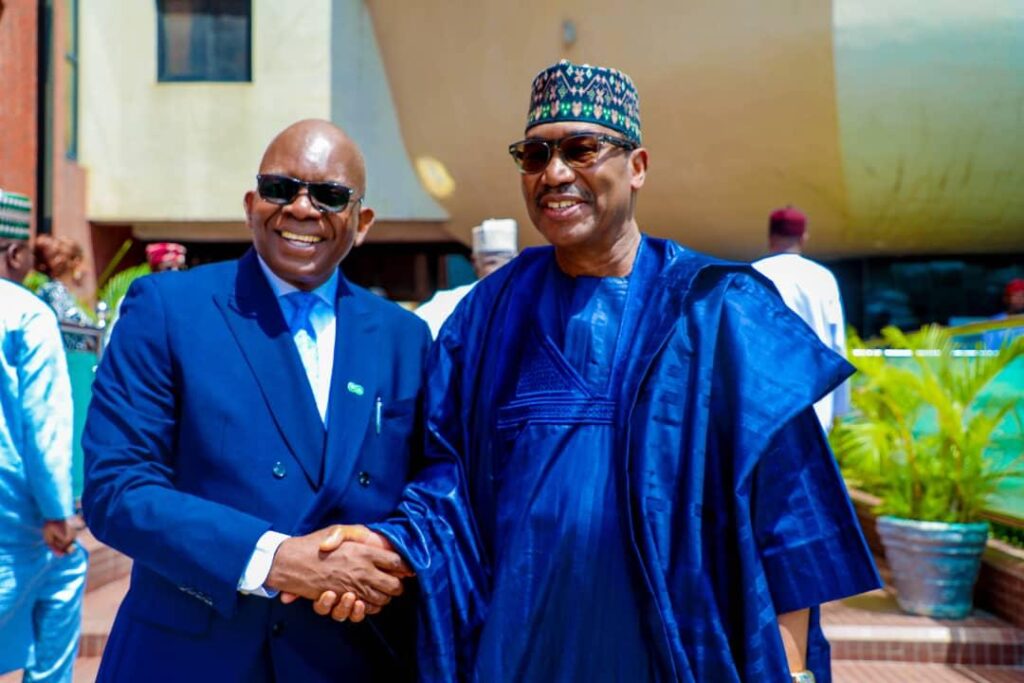
Dr. Pius Akutah, MON, Executive Secretary/CEO Nigerian Shippers’ Council in warm handshake with His Excellency, Dr. Ibrahim Shema, Chairman, Governing Board Nigerian Shippers’ Council (NSC) at the inaugural meeting of the Governing Board of NSC at the Council’s Headquarters, Lagos
The newly inaugurated Governing Board of the Nigerian Shippers’ Council (NSC) has aligned with President Bola Tinubu’s economic reform agenda, vowing to reposition the maritime sector as a key driver of Nigeria’s push toward a $1 trillion Gross Domestic Product (GDP) by 2030 and at least seven per cent economic growth by 2027 to 2028.
At its maiden meeting in Lagos, the board signalled a shift toward a more strategic and performance-driven role for the Council, with emphasis on trade efficiency, revenue mobilisation and private sector confidence within the Marine and Blue Economy framework.
Chairman of the board, Dr. Ibrahim Shema, said the NSC must move beyond routine regulation and become a frontline institution in Nigeria’s economic transformation.
“It is of significant importance that the Shippers’ Council and the Ministry of Marine and Blue Economy are determined to support the President’s vision of a one-trillion-dollar economy and seven per cent growth. The Council, the Board and management are hereby called to service. We have a lot of work ahead of us”, Shema said.
The former Katsina State Governor noted that achieving the targets would require sustained commitment from both the board and management, stressing that all hands must be on deck for Nigeria to fully unlock the opportunities in the blue economy.
According to him, the Maritime Sector sector remains one of the country’s most underutilised assets for growth, job creation and global competitiveness.
“As demonstrated by the presentation we received this morning, there is a clear need for collective effort if the country is to move towards its full potential in the blue economy sector”, Shema added.
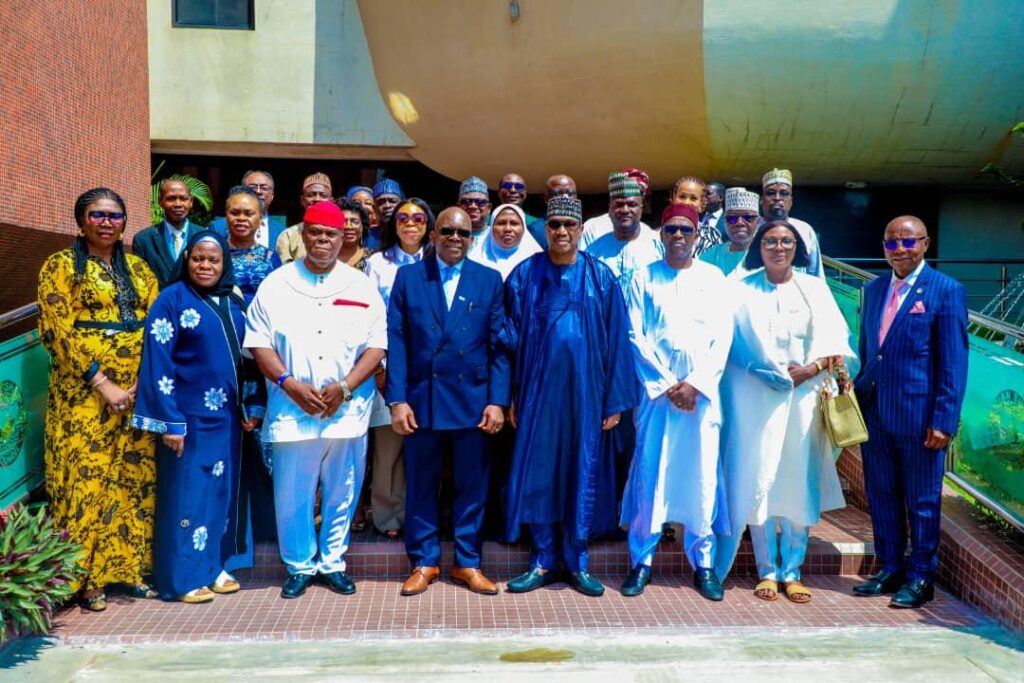
He explained that the Council’s reform focus would include improving the ease of doing business at the ports, facilitating trade and commerce, enhancing revenue generation, and strengthening collaboration with stakeholders across the real economy and the maritime industry.
Earlier, the Executive Secretary and Chief Executive Officer of the Council, Dr. Pius Akutah, described the new board as a strategic partner in repositioning the NSC for stronger institutional and financial performance.
He said a productive board-management relationship would translate into measurable results for the Council and the national economy.
“These initiatives are critical to strengthening regulatory clarity, improving cargo visibility, enhancing national security, and securing sustainable revenue for the Council”, Akutah said.
He identified the Council’s key priorities to include the actualisation of the Nigeria Port Economic Regulatory Agency (NPERA) Bill, the implementation of the International Cargo Tracking Note (ICTN), and the operationalisation of the one per cent Freight Stabilisation Fee.
While noting the enormity of the task ahead, Akutah said the reforms also provide a unique opportunity to reposition the NSC as a financially resilient and institutionally stronger regulator.
“Management is fully committed to supporting the Board with robust data, sound financial analysis and structured stakeholder engagement to ensure that all initiatives are pursued in a lawful, transparent and stakeholder-responsive manner”, he stated.
“With the guidance of this Board, I am confident that we will continue to protect shippers’ interests, promote efficient port operations and contribute meaningfully to national economic growth”, Akutah added.
Describing the maiden meeting as historic, the Executive Secretary/CEO expressed optimism that the calibre of the board would accelerate the Council’s mandate and deepen the Maritime Sector’s contribution to Nigeria’s economic expansion.