

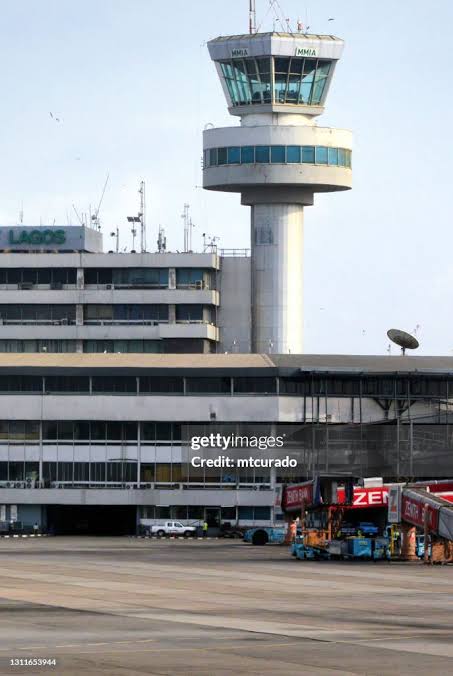
Industry leaders have outlined an ambitious roadmap to reposition the Murtala Muhammed International Airport (MMIA), Lagos, as a safe and economically viable aviation hub, with strong emphasis on infrastructure upgrade, technology adoption, and policy reforms.
The resolutions were contained in a communiqué issued at the end of the first quarter Business Breakfast Meeting of the Aviation Safety Round Table Initiative (ASRTI), held at Golfview Hotels & Suites, Ikeja, on Thursday, March 26, 2026.
The meeting, themed “Building MMIA Into A Safe & Economically Viable Hub,” featured the Managing Director/Chief Executive of the Federal Airports Authority of Nigeria (FAAN), Olubunmi Kuku, as keynote speaker.
At the end of deliberations, stakeholders agreed that Nigeria must urgently address critical gaps to achieve global hub status, beginning with the provision of modern transit facilities at MMIA to align with international standards.
They also called for the emergence of two to three strong indigenous airlines to serve as national flag carriers, noting that this would significantly boost passenger and cargo traffic while strengthening Nigeria’s position in the global aviation market.
The communiqué stressed the need for accelerated adoption of technology to improve passenger experience, alongside the development of modern cargo terminals and cold-chain systems to enhance cargo handling efficiency.
Participants further advocated positioning Nigeria as a Maintenance, Repair and Overhaul (MRO) hub, a move expected to unlock substantial value across the aviation supply chain and reduce dependence on foreign facilities.
To improve connectivity within the airport, stakeholders recommended high-level engagements towards the development of a monorail system linking airport terminals.
On safety and operational efficiency, the meeting urged the upgrade of airfield lighting on Runways 18L/36R and key taxiways to Category II LED standards, as well as the deployment of advanced Airport Surface Movement Guidance and Control Systems (A-SMGCS) and robust access control mechanisms.
The communiqué also highlighted the urgent need to expand apron space and aircraft parking stands, including the relocation of obstructing hangars to accommodate wide-body aircraft operations.
In addition, stakeholders called for the installation of multiple avio bridges to enable simultaneous aircraft turnaround and reduce ground time.
They further urged the FAAN management to upgrade cargo terminal infrastructure and integrate air cargo logistics systems for seamless operations.
Crucially, the forum emphasised the importance of inclusive stakeholder engagement in the ongoing modernisation of MMIA, insisting that all phases, from design to execution must reflect industry-wide input.
The resolutions, according to participants, provide a strategic pathway for transforming MMIA into a competitive aviation hub capable of driving economic growth and enhancing Nigeria’s global connectivity.