
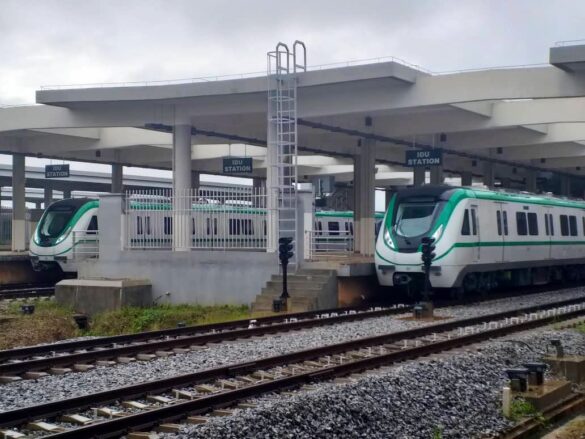
The Nigerian Railway Corporation (NRC) is poised to transform the country’s rail transport sector with plans to adopt Liquefied Natural Gas (LNG)-powered trains and expand the national rail network from 4,000 to 10,000 kilometers in the next five years.
According to the Managing Director of the NRC, Dr. Kayode Opeifa, the corporation has completed the LNG concept phase and successfully demonstrated the technology for one month. He revealed that the corporation would soon deploy LNG-powered trains on the Lagos-Ibadan and Warri-Itakpe routes, where gas infrastructure is readily available.
Opeifa noted that adopting LNG aligns with Nigeria’s gas expansion agenda and will significantly cut operating costs while improving energy security for the rail sector. He also outlined an ambitious expansion plan for the national rail network, with a target to reach 20,000 kilometers in the next 20 years.
The NRC boss emphasised the need for substantial private-sector participation to achieve these targets, adding that government budgets alone cannot fund the scale of investment required for the rail sector. He revealed that the corporation is open to concession and other partnerships, and that the government is willing to provide sovereign guarantees for railway investments.
Opeifa also highlighted the progress made by the NRC in recent years, including the revival of investor confidence and interest in the rail sector. He noted that several licenses have already been taken up in recent weeks, a development he described as a vote of confidence in Nigeria’s evolving rail future.
The NRC is also introducing digital systems and planning major network expansions, including the completion of the Lagos-Kano line and the Port Harcourt-Maiduguri corridor.
The corporation is collaborating with several state governments to boost the use of rail assets and is willing to work with partners, including state and private sector entities.