



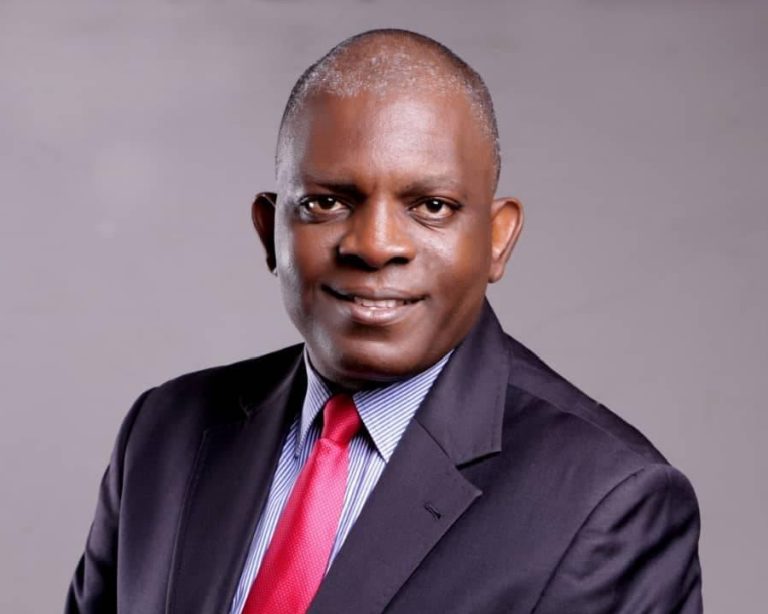
The Executive Secretary and Chief Executive Officer of the Nigerian Shippers’ Council (NSC), Pius Akutah, has explained the reason behind the delay in the passage of the Nigeria Port Economic Regulatory Agency (NPERA) Bill, which was transmitted to Bola Tinubu last year following its approval by the National Assembly of Nigeria.
Akutah disclosed that the President returned the bill to the legislature after identifying certain provisions that conflicted with the Nigerian Tax Administration Act (NTAA) 2025.
He made the clarification while speaking at the Council’s ongoing 2026 Strategic Management Retreat holding in Abeokuta, Ogun State.
The four-day retreat, themed “Advancing Strategic Execution: Driving Collaboration, Innovation and Excellence for a Future-Ready NSC”, is scheduled to run from March 4 to 7, 2026, and aims to strengthen collaboration, innovation, and operational excellence within Nigeria’s maritime sector.
According to Akutah, although the bill had earlier been passed by both chambers of the National Assembly and forwarded for presidential assent, issues were discovered during the review process.
“As you are aware, the Bill had earlier been passed by the National Assembly and transmitted for Presidential assent. During the review process, however, certain provisions were observed to conflict with the Nigerian Tax Administration Act (NTAA) 2025. Therefore, the Bill was returned to the National Assembly for necessary corrections”, he said.
The NSC boss further revealed that the House of Representatives of Nigeria has already corrected the conflicting provisions and that the revised bill is currently awaiting concurrence from the Nigerian Senate.
He expressed optimism that once the bill receives presidential assent, it will provide the statutory framework needed to strengthen Nigeria’s port economic regulatory system and reposition the Nigerian Shippers’ Council for its expanded mandate.
On staff welfare, Akutah disclosed that the Council’s proposed salary review has already received approval from the Federal Ministry of Marine and Blue Economy and the Office of the Head of the Civil Service of the Federation.
He explained that the proposal is currently undergoing final vetting by the Budget Office of the Federation and will subsequently be forwarded to the National Salaries, Incomes and Wages Commission for final approval before implementation.
Akutah also announced several welfare improvements for staff, including an upward review of the Children Education Grant per term, the introduction of Health and Social Club allowances, and the introduction of Proficiency Allowances aimed at encouraging professional development.
He noted that the initiatives reflect management’s commitment to strengthening staff welfare and boosting institutional morale.
The NSC chief, however, cautioned staff to uphold high ethical standards, warning against gossip and misinformation within the organisation.
According to him, the Nigerian Shippers’ Council is a regulatory institution of national importance, and its credibility and authority depend largely on the professionalism, integrity, and conduct of its workforce.
Akutah urged staff to take full ownership of the Council’s ongoing transformation agenda, stressing the need for stronger interdepartmental collaboration, greater innovation in the deployment of technology and regulatory tools, and an uncompromising commitment to excellence in service delivery.
He said the retreat’s theme reflects three strategic imperatives—collaboration, innovation, and excellence—which must guide the Council’s next phase of institutional development.
“Collaboration, because no regulatory institution can operate effectively in isolation within a complex maritime ecosystem. Innovation, because the dynamics of global trade and logistics require institutions that are adaptive, technology-driven and forward-looking. Excellence, because the credibility and authority of a regulator ultimately depend on the professionalism, integrity and performance of its people.
“These three pillars must therefore shape how we think, how we lead, and how we execute our responsibilities as an institution”, Akutah stated.