


…says MMAC created layers of checks to reduce unmanifested goods
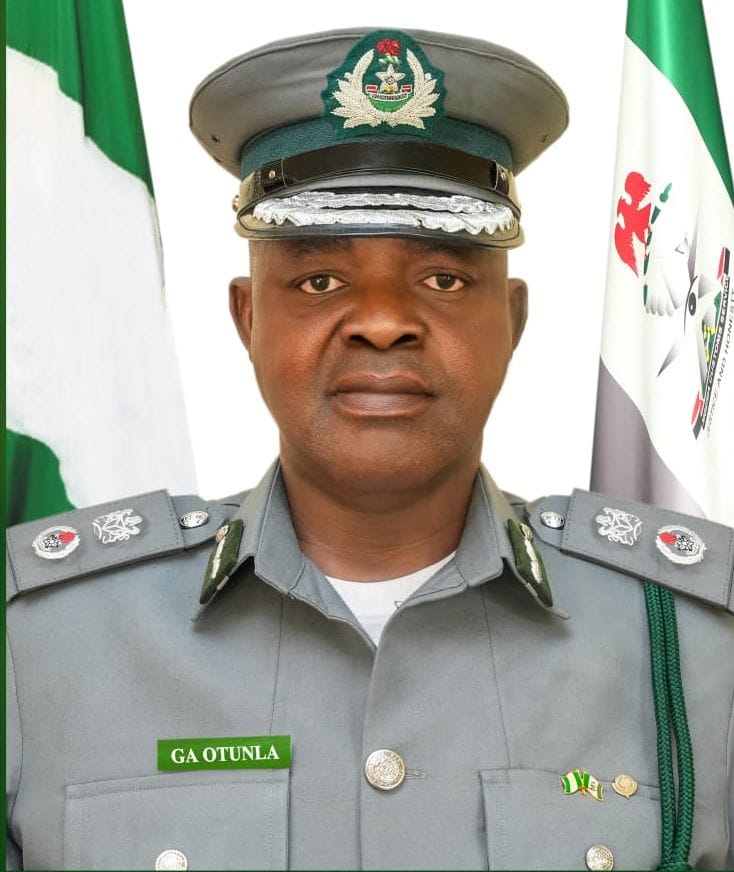
The Area Controller of the Murtala Muhammed Airport Command (MMAC), of the Nigeria Customs Service (NCS), Comptroller Godwin Otunla, has expressed concern over the far-reaching impact of the ongoing conflict involving the United States, Israel, and Iran, noting that disruptions in global airspace are already affecting cargo operations and revenue generation in Nigeria.
Speaking with select journalists, Otunla said the crisis has led to restricted air movements across parts of the Middle East, particularly affecting airlines operating from the Gulf region, which are key contributors to cargo throughput at the command.
He explained that several aircraft are currently grounded due to security challenges in the region, a development that is beginning to reflect on Nigeria’s import-dependent economy and customs revenue performance.
“Let me give an example of Qatar Airways, which supplies this place with a lot of cargo. Right now, airlines from the UAE, Dubai and other Gulf regions are affected because aircraft cannot safely operate due to drones and missiles in the airspace”, he said.
“Some aircraft are on the tarmac and cannot fly. This will affect our revenue collection. Last month we recorded about N17 billion after N24 billion in January. This month, we may not reach N17 billion. We hope the situation improves because the effects are global”.
Otunla also drew a comparison between land borders and airport operations, describing both as entry points into the country but noting significant differences in the nature of smuggling and enforcement.
According to him, while land borders such as Ogun I Command in Idiroko are vast and more susceptible to unmanifested goods due to their porous nature, airport cargo operations are more structured, with goods arriving under documented manifests and airway bills.
“At the airport, every cargo is manifested and processed through bonded terminals and warehouses before release. Smuggling here is usually through concealment or bunching of smaller items inside larger consignments”, he explained.
He added that unlike land borders where goods can enter through unapproved routes, airport cargo is easier to track due to electronic documentation and controlled handling procedures.
To address concealment practices, Otunla disclosed that MMAC has introduced additional internal monitoring mechanisms aimed at strengthening oversight and reducing infractions.
“These are layers of checks we created internally. They are not part of the normal customs process, but they help us monitor and track activities more effectively”, he said.
“We periodically review airway bills and manifests, which are electronically transmitted into the system. We also engage shed operators to identify consignments and track their movement”.
He further explained that defaulters are identified through system audits and subjected to penalties, including punitive measures in cases of repeated violations.
“Once we identify discrepancies, we calculate duties using Cost, Insurance and Freight (CIF). In cases of recalcitrant behaviour, we impose stricter penalties as a deterrent”, he added.
Otunla noted that while enforcement is critical, it must be balanced with efficiency and trade facilitation, stressing that recovered penalties may not always reflect the full value of diverted goods once they have left the system.
He also commended the Comptroller of Ogun I Area Command, Comptroller Afeni, for his efforts in combating smuggling at the Idiroko border, particularly his ability to achieve significant seizures without conflict.
“It is important to carry out this job without loss of lives. Maintaining good relations with our neighbors in the Benin Republic is also key”, he said.
“Not every situation requires force; dialogue, collaboration, and stakeholder engagement remain essential tools in achieving effective border management”.