


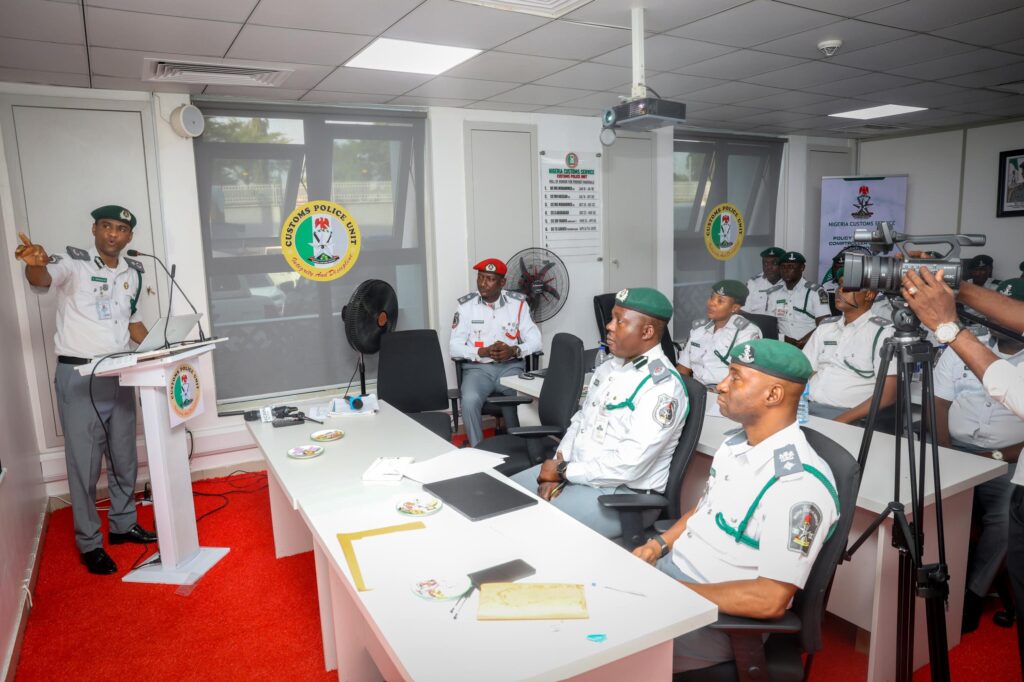
The Nigeria Customs Service (NCS) has intensified its crackdown on illicit financial flows and terrorism financing through a high-level sensitisation programme on Anti-Money Laundering and Combating the Financing of Terrorism (AML/CFT), held at its Headquarters in Maitama, Abuja.
The session, held on May 4, 2026, formed part of the Service’s first-quarter operational review and targeted training for officers of the AML/CFT Unit. It focused on strengthening capacity, reinforcing ethical standards, and enhancing collaboration with relevant agencies.
Speaking at the programme, the Assistant Comptroller-General in charge of Headquarters, Muhammad Shuaibu, said the initiative underscores the growing significance of AML/CFT operations within both the Service and Nigeria’s broader financial and security architecture.
He noted that the Unit’s impact now extends beyond traditional border points such as seaports and airports, adding that its recent achievements have positioned it as a key pillar in safeguarding the nation’s financial system.
Shuaibu also pointed to improvements in Nigeria’s financial ecosystem, highlighting the global functionality of Nigerian-issued bank cards, which now support seamless international transactions with automatic currency conversion.
“This is a major milestone. Nigerians can now travel and use their cards anywhere in the world, with transactions reflecting the local currency. This is a significant achievement for the nation”, he said.
He further stressed that postings to the AML/CFT Unit should be viewed as opportunities for professional growth and capacity building, rather than punitive assignments. He also referenced ongoing collaboration with the World Customs Organization (WCO) to align operations with international best practices.
Also speaking, the Acting Provost Marshal, Saulawa Sunusi, emphasised the importance of integrity, discipline, and professionalism in the discharge of duties.
“Officers must remain disciplined, professional, and committed to ethical conduct. Integrity remains the foundation of everything we do”, he said, urging personnel to uphold high standards of fairness, punctuality, and leadership by example.
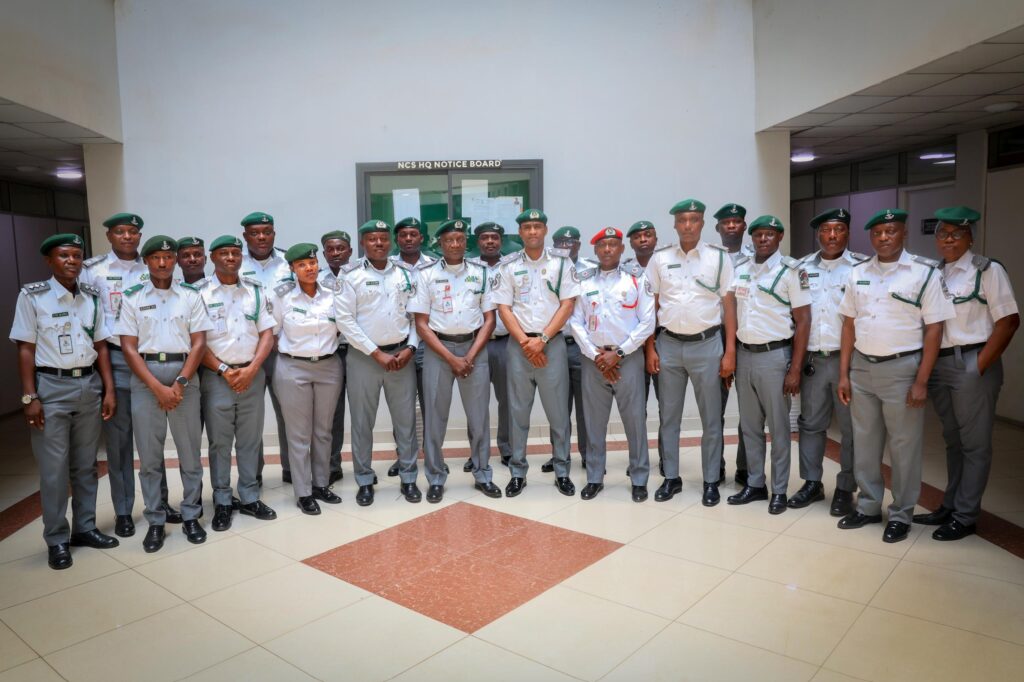
He further highlighted the need for strong internal collaboration and effective conflict resolution, noting that synergy within the Service is critical to operational success.
Participants were encouraged to remain vigilant, maintain high morale, and carry out their responsibilities without bias. They were also cautioned against the unauthorised disclosure of sensitive information and advised to adhere strictly to official communication protocols.
The training featured a lecture by Faisal Abubakar on service correspondence, providing officers with practical guidance on effective official communication.
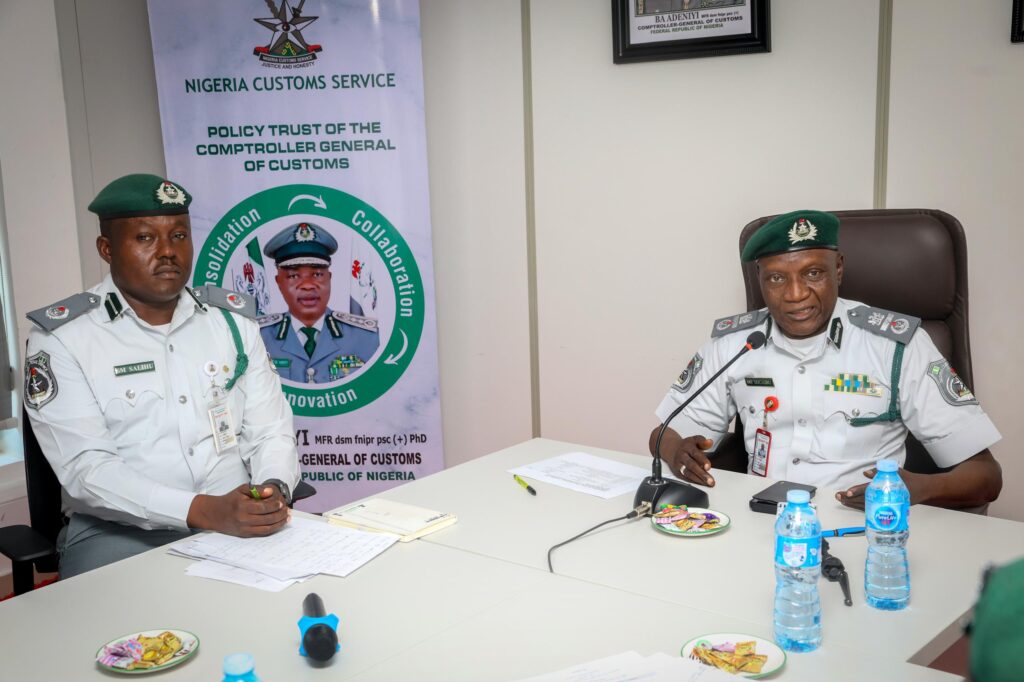
In his remarks, the National Coordinator of AML/CFT, Mas’ud Salihu, highlighted the evolving nature of financial crimes, noting a growing shift towards digital and virtual platforms.
He explained that ongoing efforts are focused on strengthening enforcement mechanisms, identifying operational gaps, and improving communication between field operatives and management.
Salihu emphasised that continuous sensitisation remains vital in tackling emerging threats, urging officers to stay proactive in detecting and disrupting illicit financial activities.
He also commended participants for their engagement and acknowledged the Service’s leadership for its sustained support in strengthening the AML/CFT framework.