



…Wike signs maintenance pact as monument begins new era
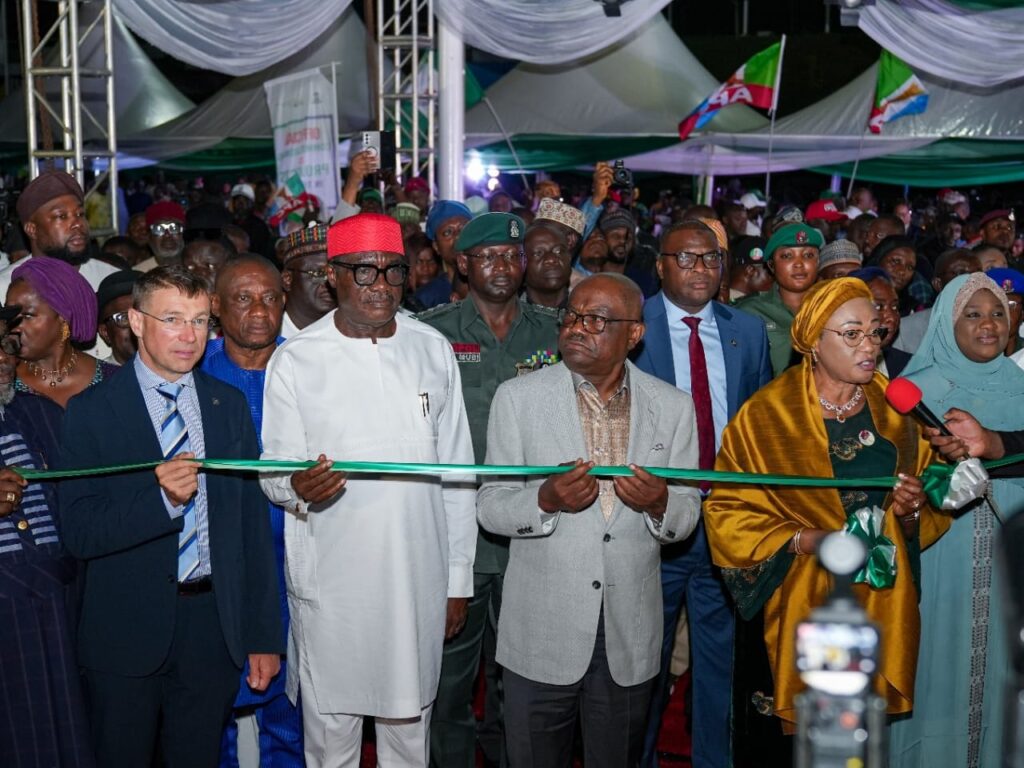
Oluremi Tinubu, fourth from left, at the commissioning of the remodelled Abuja City Gate,
Thursday night. Fourth from right is the Managing Director, Julius Berger Nigeria PLC, Engr.
Dr. Peer Lubasch.
President Bola Ahmed Tinubu and the Minister of the Federal Capital Territory (FCT), Nyesom Wike, have commended Julius Berger Nigeria Plc for delivering the transformation of the iconic Abuja City Gate, describing the remodelled landmark as a symbol of national renewal, urban rebirth and Nigeria’s aspirations for a modern capital city.
The upgraded monument was inaugurated on Thursday in Abuja during activities marking the third anniversary of the Tinubu administration and the 50th anniversary of the Federal Capital Territory. President Tinubu was represented at the ceremony by the First Lady, Senator Oluremi Tinubu.
In his address, the President described the Abuja City Gate as one of Nigeria’s most recognisable national monuments and an enduring symbol of the country’s identity, unity and progress.
He said the remodelling reflects his administration’s commitment to developing a capital city that reflects Nigeria’s status on the global stage, noting that the upgraded gateway now offers visitors a fitting first impression of Abuja.
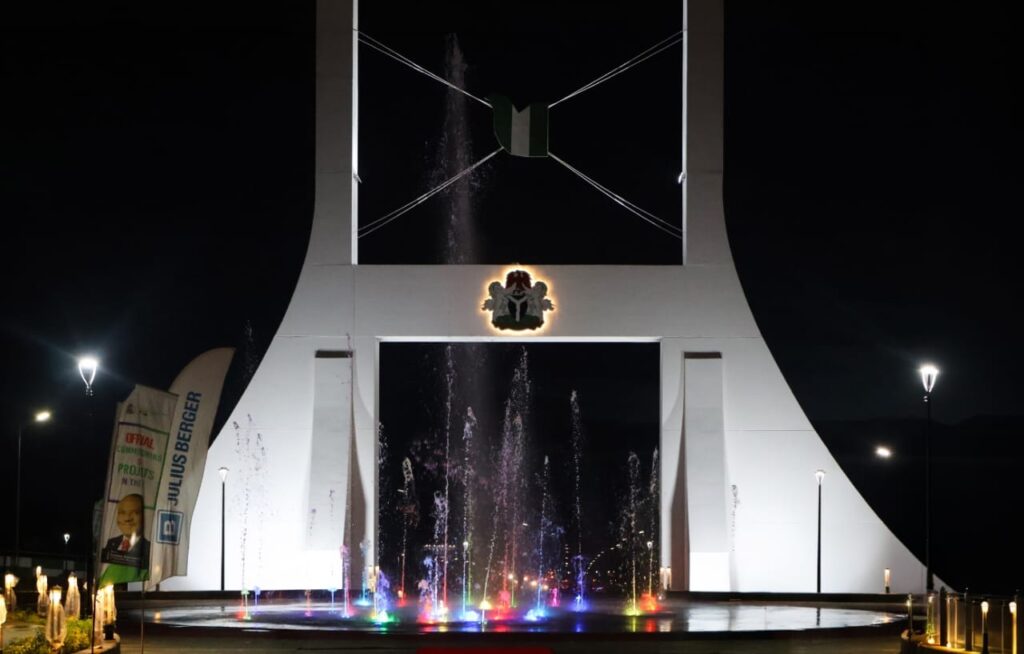
Tinubu highlighted the monument’s striking new water fountain, symbolising Nigeria’s 36 states and the Federal Capital Territory, saying the redesign places the City Gate alongside notable urban landmarks around the world.
Wike: Julius Berger delivered world-class project
FCT Minister Nyesom Wike praised Julius Berger for restoring the long-neglected monument, revealing that the project was inspired by First Lady Oluremi Tinubu’s concern over the deteriorating condition of the City Gate.
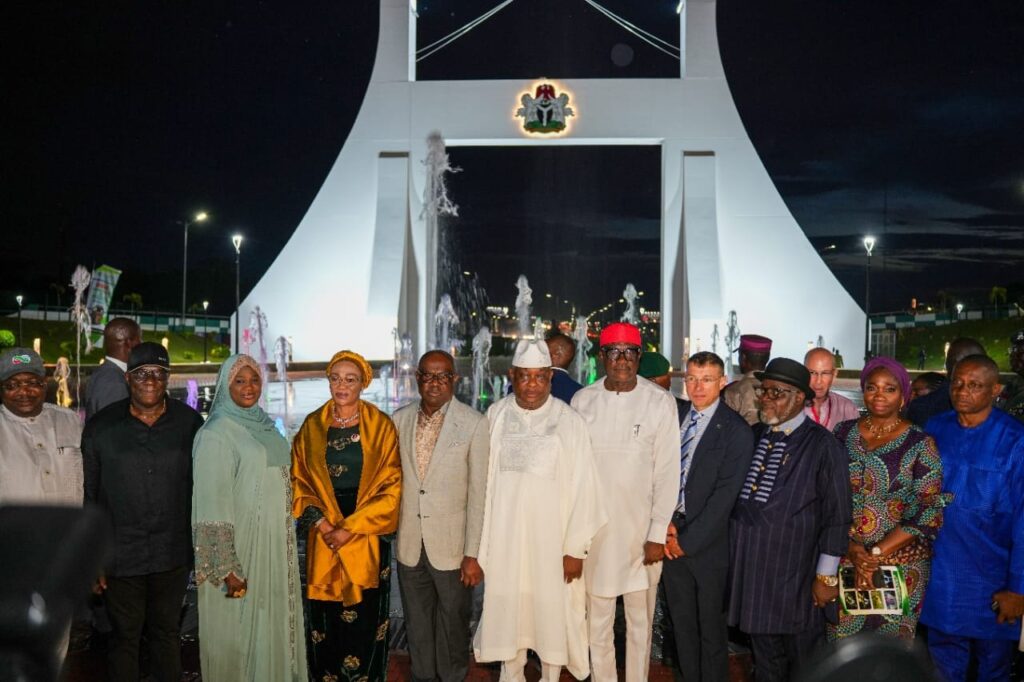
Oluremi Tinubu, fourth from left, at the commissioning of the remodelled Abuja City Gate,
Thursday night. Fourth from right is the Managing Director, Julius Berger Nigeria PLC, Engr.
Dr. Peer Lubasch.
According to Wike, Julius Berger developed the design after receiving the project brief from the FCT Administration and successfully executed the reconstruction, landscaping, installation of the iconic fountain, parking facilities and other visitor-friendly infrastructure within the stipulated timeline.
To preserve the upgraded facility, Wike announced that the FCT Administration would sign a Memorandum of Understanding with Julius Berger for its maintenance, ensuring the monument retains its new appeal for years to come.
He also disclosed plans to further develop the surrounding environment with restaurants, public conveniences, car parks and recreational facilities, transforming the City Gate into a tourism and leisure destination for residents and visitors.
Officials hail new symbol of national pride
Also speaking at the event, the Minister of State for the FCT, Dr. Mariya Mahmoud, described the remodelled City Gate as a powerful symbol of the ongoing transformation of Abuja, saying it represents a new era of infrastructural renewal, urban regeneration and national pride.
The Acting Executive Secretary of the Federal Capital Development Authority (FCDA), Richard Dauda, said the City Gate remains Abuja’s most iconic landmark and continues to project Nigeria’s hospitality, unity and aspirations to the world.
‘We build spaces that inspire communities’ — Lubasch
Managing Director of Julius Berger Nigeria Plc, Engr. Dr. Peer Lubasch, reaffirmed the company’s commitment to Nigeria’s development, noting that the engineering giant has remained a trusted partner in nation-building for more than six decades.
“For over 60 years, Julius Berger has been a proud partner in Nigeria’s growth. We do not just build structures; we build spaces that inspire communities”, he said.
Lubasch recalled that Julius Berger constructed the original Abuja City Gate in 1991 during the administration of former military President Ibrahim Babangida to commemorate the relocation of Nigeria’s capital from Lagos to Abuja.
He described the monument as one of the country’s most enduring national symbols, welcoming residents, visitors and dignitaries into the Federal Capital Territory while reflecting Nigeria’s strength, diversity and shared heritage.
According to him, the company’s objective in returning to the project was to preserve the historical identity of the City Gate while transforming it into a modern public space capable of serving future generations.
“Our goal was simple: preserve its proud history while upgrading it into a modern space for the future,” he said.
The successful completion of the project further reinforces Julius Berger’s reputation as one of Nigeria’s leading engineering and construction firms, with the renewed Abuja City Gate expected to enhance the capital city’s image as a modern destination comparable with major cities around the world.