


“Nigeria’s transport sector may be moving, but it is not moving together. That was the stark verdict from industry leaders at the 2026 Global Transport Policy (GTP) Annual Multimodal Roundtable in Lagos, where stakeholders warned that fragmented policies, weak coordination, and poor integration across road, rail, maritime and aviation continue to undermine efficiency and safety.
“Their message was clear: without a unified national transport framework, the country’s ambition for a modern, multimodal system will remain out of reach” Pearl Ngwama reports.
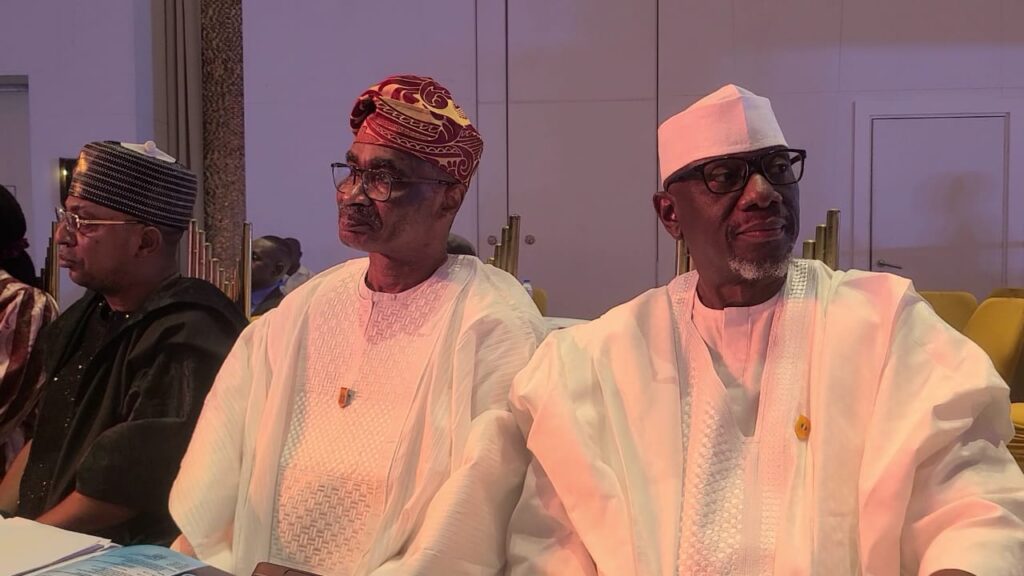
Stakeholders across Nigeria’s transport and logistics ecosystem have made a resounding call for the unification of the nation’s fragmented transport policies into a single, integrated framework, warning that continued disjointedness will undermine safety, efficiency, and sustainability.
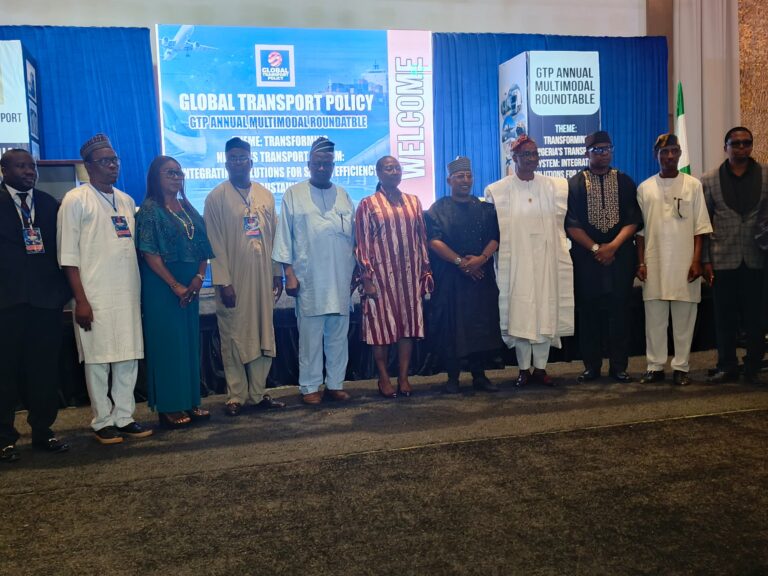
This consensus formed the high point of deliberations at the 2026 Global Transport Policy (GTP) Annual Multimodal Roundtable Conference held at the Marriott Hotel, Ikeja, Lagos, where industry leaders, regulators, and academics converged under the theme: “Transforming Nigeria’s Transport System: Integrating Solutions for Safety, Efficiency and Sustainability”.
From road to rail, maritime to aviation, speakers repeatedly stressed that Nigeria’s transport challenges are less about lack of investment and more about poor coordination, weak institutions, and absence of a unified national direction.
Fragmentation, Policy Instability Undermining Growth
Delivering the keynote address, Dr. Boboye Oyeyemi, former Corps Marshal of the Federal Road Safety Corps (FRSC) and President of the Chartered Institute of Transport and Logistics (CITL), identified policy fragmentation and inconsistency as the most critical obstacles stalling progress in the sector.
According to him, “the lack of policy continuity, what we often describe as policy somersault remains the bane of transport development in Nigeria”.
He noted that while investments have been made across various modes of transport, the absence of institutional intelligence and coordinated system management continues to limit impact.
Weak enforcement of road regulations, he added, has contributed to infrastructural deterioration, including weakened bridges and rising safety risks.
Oyeyemi argued that Nigeria must urgently adopt a unified structure that brings all transport modes under one coordinated authority, similar to what obtains in more advanced economies.
“There is an urgent need to harmonise policies across all arms of transport. Each mode may have its peculiarities, but there must be a central framework that ensures synchronisation”, he said, proposing the establishment of a National Integrated Transport Authority.
Road Dominance, Rail Collapse Driving Congestion
The former FRSC boss also highlighted the dangerous overreliance on road transport, describing it as a direct consequence of the collapse of the rail system.
“The monopoly of road transport has led to severe urban congestion and inefficiencies. Reviving rail is not optional – it is critical to restoring balance”, he stated.
Despite these concerns, Oyeyemi commended the Lagos State Government for notable strides in transport management, particularly the deployment of intelligent traffic systems and surveillance cameras, urging other states to emulate such technology-driven approaches.
Gains in Aviation and Maritime, But Sustainability Questions Remain
Oyeyemi acknowledged improvements in the aviation sector, praising the Minister of Aviation and Aerospace Development, Festus Keyamo, alongside regulatory agencies, for strengthening oversight and enforcement.
However, he raised concerns about sustainability, questioning whether current gains would endure beyond the present administration.
In the maritime sector, he lauded enhanced collaboration between the Nigerian Maritime Administration and Safety Agency (NIMASA) and the Nigerian Navy, noting significant reductions in piracy and boat mishaps. Yet, he pointed to persistent inefficiencies at Nigerian ports, where cargo clearance still takes up to 21 days compared to about two days in developed economies.
Data, Institutions and Workforce Gaps
A recurring theme across sessions was the urgent need for robust data systems and stronger institutions. Oyeyemi stressed that without reliable data, planning and policy execution would remain ineffective.
This position was reinforced during the panel discussions, where participants identified workforce deficiencies as a major constraint.
A professor of transport management warned that infrastructure expansion alone would not deliver results without skilled professionals to manage the system.
“We can build ports, rail lines, and highways, but without a professionalised workforce, our efforts will go down the drain”, he said, calling on training institutions to scale up the production of industry-ready experts.
Informality and Disjointed Structures
A representative of the Lagos Metropolitan Area Transport Authority (LAMATA) highlighted the dominance of informal operators within the sector, stressing the need for formalisation to achieve regulation and efficiency.
“We must bring the informal sector into a structured system. Without formalisation, integration will remain difficult”, the representative noted, adding that LAMATA has been taking steps in that direction.
Similarly, Kingsley Igwe, Registrar of the Council for the Regulation of Freight Forwarding in Nigeria (CRFFN), emphasised that the sector’s fragmentation is not due to absence of policies, but lack of unification.
“What Nigeria needs is not more policies, but a unified transport policy – a National Transport Policy that integrates all modes”, he said.
Igwe further stressed that efficient multimodal connectivity would significantly reduce the cost of cargo movement and improve passenger mobility, warning that the current disconnect between transport modes could persist for years if not addressed.
Digital Integration and Early Talent Development
The Director-General of the Nigerian Institute of Transport Technology (NITT) called for digital integration across all transport systems, noting that the global shift toward a digital economy makes such transformation inevitable.
“Integration today must be digital. Collaboration across modes should be driven by technology and data”, he said.
Panelists also advocated for the inclusion of National Youth Service Corps (NYSC) members in the transport ecosystem early in their careers, as a strategy for building a pipeline of skilled professionals.
Public-Private Collaboration Key to Progress
Across board, speakers agreed that stronger collaboration between government and the private sector would be essential to unlocking growth and efficiency.
They concluded that while dialogue remains important, the sector must now transition decisively to implementation.
“Intermodal transport will only succeed when we move from conversations to coordinated action”, a panelist remarked.
Economic Loss Due to Transport Inefficiencies
Echoing this call for integration, the Convener of the Roundtable, Dr. Oluwasegun Musa, warned that Nigeria’s transport inefficiencies are costing the country an estimated ₦3.2 trillion annually.
“Our theme is not a slogan; it is a strategic imperative”, Musa said, stressing that fragmented systems, poor modal integration and weak coordination continue to drive up logistics costs and erode productivity.
He noted that with over 90 per cent of freight and passengers still dependent on road transport, and rail contributing less than one per cent, Nigeria faces a “dangerous imbalance” that must be urgently corrected through a truly integrated, multimodal framework
A Unified Path Forward
As deliberations closed, one message stood clear: Nigeria’s transport future hinges on integration.
From harmonised policies and professionalised workforce to digital systems and institutional reforms, stakeholders insist that only a unified approach can deliver a safer, more efficient, and sustainable transport system.
Until then, the nation risks continuing on a path of fragmented progress where investments are made, but impact remains limited and losses persist.