



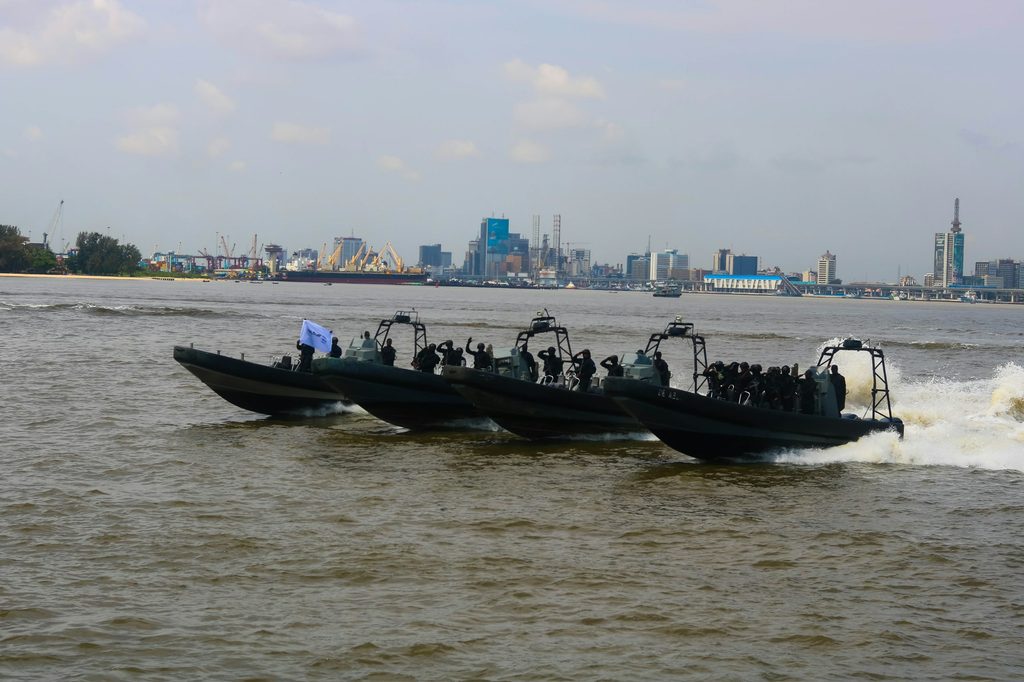
The Nigerian Maritime Administration and Safety Agency (NIMASA) has unveiled newly acquired security assets, including advanced surveillance technology, unmanned aerial vehicles (UAVs), armoured vehicles and specialised tactical equipment, to strengthen maritime security and sustain the fight against piracy in Nigerian waters.
The assets, showcased at the 2026 Africa International Defence Exhibition (AFRIDEX), are designed to enhance the operational capacity of the Integrated National Security and Waterways Protection Infrastructure, popularly known as the Deep Blue Project.
Among the newly unveiled equipment are light utility vehicles designed for bush and land-based operations, vertical take-off and landing (VTOL) unmanned aerial vehicles, newly delivered armoured vehicles and other specialised tactical equipment.

The Minister of Defence, General Christopher Gwabin Musa (rtd), was among the dignitaries who visited the NIMASA Deep Blue stand at the exhibition. He also witnessed a tactical demonstration simulating a piracy attack in Nigerian waters by personnel of the Deep Blue Project.
The Director-General of NIMASA, Dr. Dayo Mobereola, said the newly acquired assets would strengthen the sustainability of the Deep Blue Project and ensure that military personnel deployed under the initiative were adequately equipped to tackle piracy and other maritime security threats.
Mobereola, who was represented by the Head of the Deep Blue Unit, Mrs Aisha Yakubu Idris, reaffirmed Nigeria’s commitment to sustaining zero tolerance for illegal activities in its maritime domain.
He stressed that continuous investment in operational assets was necessary to maintain the gains recorded in maritime security and ensure that the country remained equipped to respond to emerging threats.
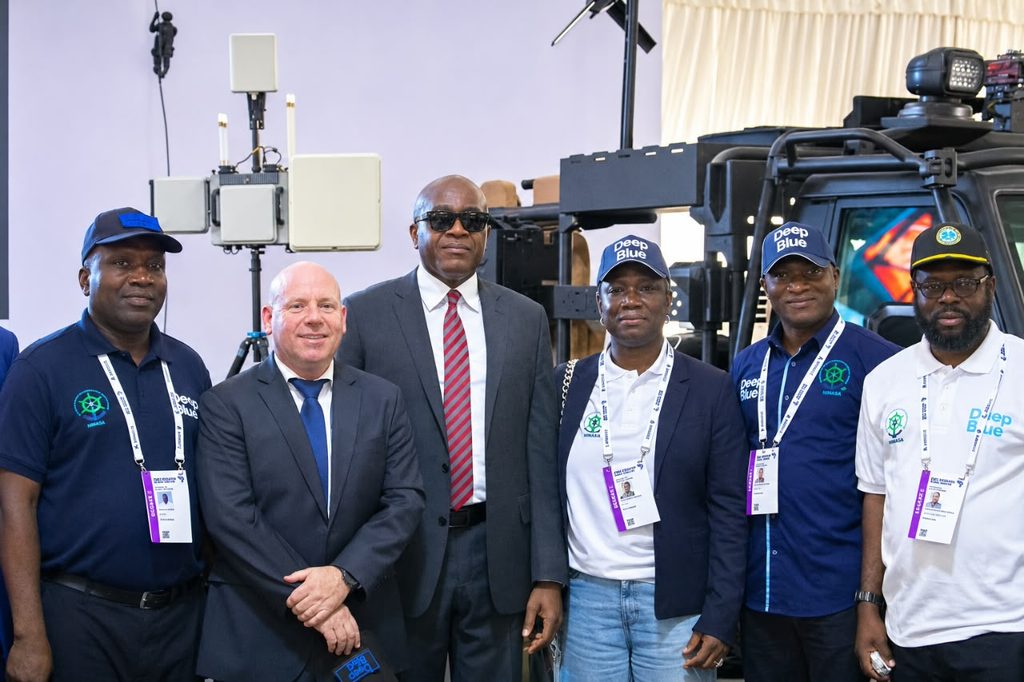
Also speaking, the Chief Executive Officer of Homeland Security International (HLS International), the technical partner to the Deep Blue Project, Tal Spektor, emphasised the importance of regular upgrades to security infrastructure in response to evolving maritime threats.
Spektor noted that maritime security extended beyond the sea, explaining that illegal offshore activities often had connections with land-based operations, making an integrated security approach essential.
He further disclosed that upgrades to the project’s intelligence systems had enhanced cargo monitoring and improved information sharing between NIMASA and other government agencies.
The 2026 Africa International Defence Exhibition attracted security organisations from different countries, alongside senior military officers and key stakeholders in Nigeria’s maritime sector.
The unveiling underscores NIMASA’s commitment to strengthening the Deep Blue Project through sustained investment in technology, intelligence and operational capacity to safeguard Nigeria’s territorial waters and maritime interests.