



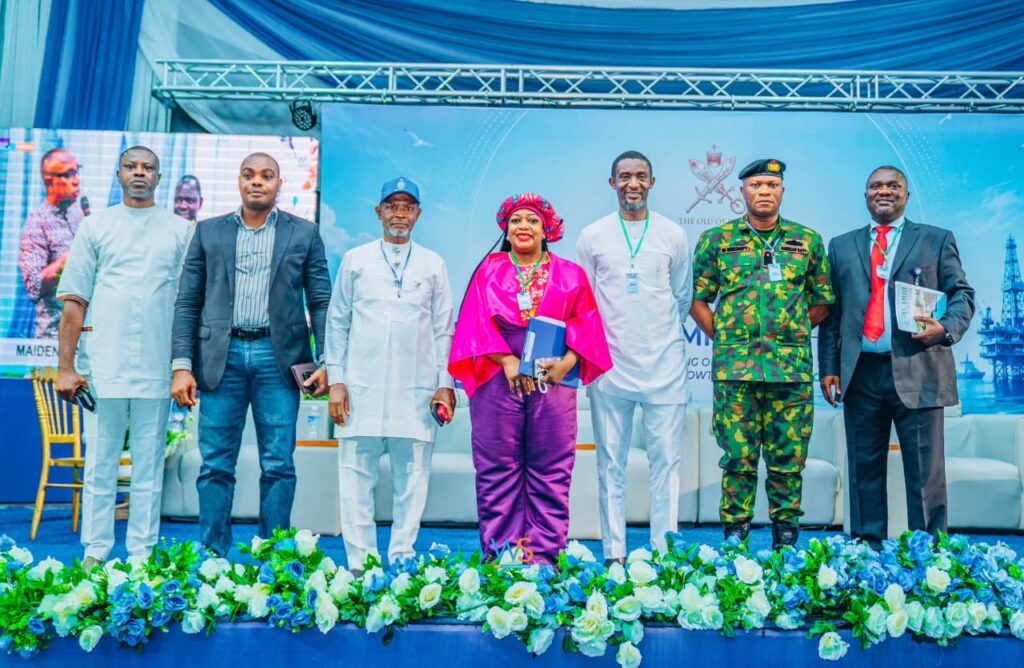
flanked left and right by other experts at the recent maiden Warri Blue Economy Summit
Africa’s quest to build a sustainable and globally competitive blue economy will depend largely on investing in Blue Education, experts have said, stressing that developing skilled human capital is essential to unlocking the continent’s vast marine and coastal resources.
The call formed a major highlight of the Maiden Warri Blue Economy Summit, held under the theme, “Harnessing Our Blue Wealth for Sustainable Growth and Shared Prosperity”. The summit brought together traditional rulers, government officials, academics, development partners, industry leaders, investors and community representatives to explore practical strategies for transforming Nigeria’s maritime and coastal resources into engines of economic growth.
Participants agreed that while Africa is richly endowed with oceans, seas, rivers and coastal ecosystems, sustainable development of these resources will require more than infrastructure, investment and policy reforms. They maintained that long-term success rests on building a knowledgeable workforce through deliberate investment in Blue Education.
Africa is home to 38 coastal and island states with abundant marine resources capable of driving economic diversification, food security, job creation, climate resilience and inclusive prosperity. However, experts warned that without developing the human capacity needed to harness these opportunities, the continent risks falling short of its blue economy ambitions.
A major presentation at the summit was delivered by Dr. Christiana Chizoba Anyika on “Renewable Energy Opportunities in the Blue Economy”. She highlighted the enormous potential of renewable energy technologies including solar, offshore wind, tidal and wave energy, and green hydrogen to power ports, fisheries, coastal communities, tourism and maritime industries while reducing carbon emissions and strengthening climate resilience.
According to her, the success of renewable energy initiatives and the broader blue economy depends on the availability of skilled professionals equipped with the knowledge to develop, manage and sustain these emerging sectors.
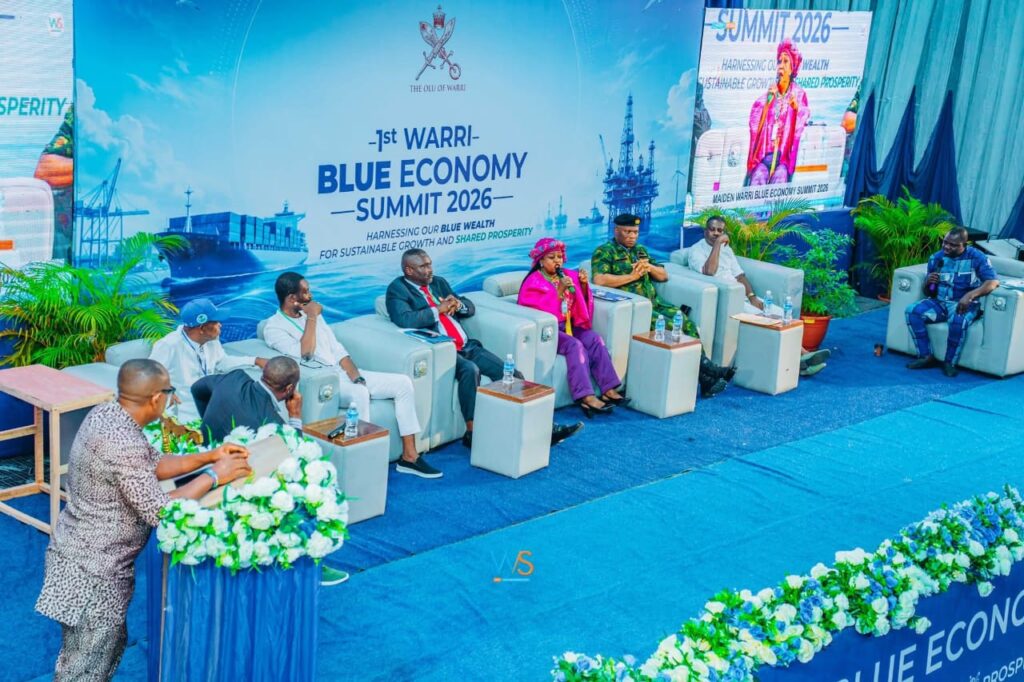
Anyika explained that Blue Education involves integrating ocean literacy, marine science, maritime studies, environmental sustainability, climate awareness and blue economy concepts into educational systems at every level. She said such an approach equips learners with the knowledge and practical skills required to protect and sustainably utilise marine and coastal resources.
She noted that investing in Blue Education would help Africa produce a new generation of marine scientists, renewable energy specialists, maritime professionals, tourism entrepreneurs, environmental managers, ocean engineers, policymakers and innovators capable of driving the continent’s blue economy transformation.
Drawing lessons from countries such as Kenya and Seychelles, Anyika observed that sustained investments in ocean literacy and marine education have encouraged innovation, strengthened marine conservation, promoted entrepreneurship and created employment opportunities for young people.
She said Nigeria is well positioned to become a leading blue economy nation, given its extensive coastline, inland waterways, mangrove forests, strategic ports and rich marine biodiversity.
However, she stressed that achieving this vision would require integrating blue economy studies into schools, universities, technical institutions and professional training programmes, while also strengthening research and innovation.
Speaking in an interview after her presentation, Anyika, who is the Convener of the Ocean Wide Tourism Empowerment Initiative (OWTEI) and presenter of Blue Horizon, described education as the critical link between Africa’s natural endowment and sustainable prosperity.
“Education is the bridge between potential and prosperity. Every child living in a coastal community should understand the value of mangroves, fisheries, marine biodiversity, renewable energy, climate resilience and coastal tourism. Every graduate should recognise the opportunities within the blue economy, while every policymaker should appreciate that investing in education is investing in sustainable national development”, she said.
She added that Blue Education also promotes environmental stewardship by encouraging responsible use of marine resources, strengthening climate adaptation, reducing pollution and empowering communities to become active custodians of their natural heritage.
According to her, while governments can build ports, enact policies and attract investments, sustainable progress will remain elusive without knowledgeable professionals and informed citizens to drive implementation.
She therefore urged governments, educational institutions, traditional institutions, development partners, civil society organisations and the private sector to collaborate in embedding Blue Education into national development strategies and educational curricula.
Anyika maintained that Africa’s oceans remain among the continent’s greatest natural assets, but their future will depend on how effectively today’s leaders prepare the next generation to manage them sustainably.
She concluded that if Africa is to transform its blue wealth into sustainable growth and shared prosperity, the journey must begin in the classroom.
“Blue Education is not simply an educational reform; it is the foundation upon which Africa’s blue economy revolution will be built”, she said.