


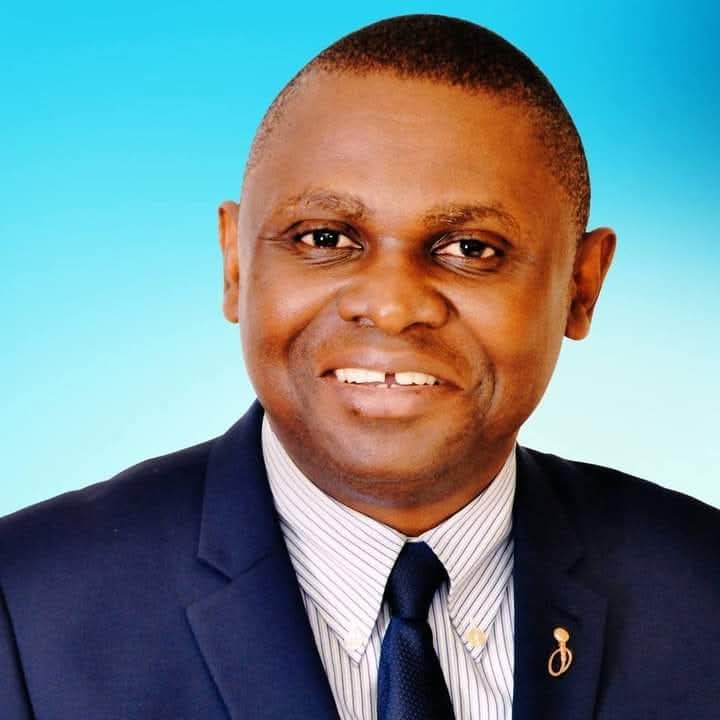
Founder of the Blue Economy Academy, Ubong Essien, has called for a fundamental shift in Nigeria’s relationship with the oceans, saying the country’s aspirations for a sustainable blue economy can only be achieved through improved ocean literacy, environmental stewardship and greater public awareness.
Essien made the call during the Code Blue Monthly Ocean Intelligence Brief, themed “Our Ocean, Our Future: Building a Sustainable, Secure and Prosperous Blue Economy for Nigeria”, organised to commemorate World Oceans Day 2026.
Speaking on the importance of the oceans, Essien noted that nearly 70 per cent of the Earth’s surface is covered by water, making the oceans indispensable to life and global economic development. He, however, lamented that human interaction with the marine environment has largely been exploitative, citing pollution, marine litter, environmental degradation and the unsustainable use of ocean resources.
He linked the increasing incidence of flooding, coastal erosion and other climate-related disasters to poor environmental practices and inadequate protection of marine ecosystems, urging Nigerians to adopt more sustainable attitudes towards the country’s marine and coastal resources.
According to him, one of Nigeria’s biggest challenges is widespread “sea blindness”—a limited understanding of the country’s vast maritime domain and its economic potential.
He said many Nigerians perceive the nation only through its landmass while overlooking the enormous opportunities within its territorial waters and Exclusive Economic Zone.
Essien stressed that Nigeria’s maritime space represents a critical frontier for economic diversification, job creation and national prosperity.
To address the knowledge gap, he unveiled “Blue for You,” an ocean awareness campaign aimed at promoting blue economy education on university campuses nationwide. The initiative will begin at the University of Lagos, where students will be introduced to the opportunities and responsibilities associated with Nigeria’s coastal and marine resources.
He said the programme is designed to help young Nigerians understand the “blue dimension” of the nation’s economy while encouraging active participation in ocean sustainability and maritime development.
Essien added that the blue economy has the capacity to generate far greater economic value and employment opportunities than many traditional sectors if properly developed and sustainably managed. He therefore called on government, the private sector, academia and the public to work together in unlocking the sector’s full potential while protecting marine ecosystems for future generations.
He explained that the Code Blue platform was established to stimulate conversations around ocean sustainability, maritime development and blue economy opportunities, while deepening public understanding of the ocean’s strategic importance to Nigeria’s future.
Also speaking, Publisher of JournalNG Magazine, Ismail Aniemu, urged governments at all levels to take urgent action to protect coastal communities threatened by ocean surges and coastal erosion. He warned that several fishing settlements in Ondo, Bayelsa and other coastal states face the risk of displacement if decisive measures are not taken.
Aniemu described the ocean as one of Nigeria’s greatest economic assets, with enormous opportunities in fisheries, tourism, marine science, renewable energy, shipping and international trade.
He advocated a more inclusive approach to blue economy development that prioritises the protection of vulnerable coastal communities whose livelihoods and infrastructure are increasingly threatened by climate change.
Aniemu also called for the development of a national “Blue Map” to demonstrate the extensive impact of the blue economy across the country, including inland states connected through maritime trade and logistics networks.
He stressed the need for improved ocean literacy, stronger environmental protection, better waste management practices and increased investment in the marine sector, noting that Nigeria’s maritime resources could become a major driver of economic growth, employment and national development if effectively harnessed.
He commended the efforts of the Blue Economy Academy, the Federal Ministry of Marine and Blue Economy, and state governments, including Lagos and Bayelsa, for promoting blue economy awareness and advancing maritime development initiatives across Nigeria.
Lending her voice to the discussion, Publisher of JustNet News, Pearl Ngwama, advocated sustained grassroots awareness campaigns on ocean literacy and proper waste management, saying many petty traders and low-income communities lack adequate knowledge of responsible waste disposal and its consequences for the marine environment.
Ngwama acknowledged the government’s public enlightenment efforts but observed that many people, regardless of their educational background, continue to ignore proper waste management practices.
She called on governments at all levels to strengthen environmental regulations and ensure strict enforcement through appropriate sanctions to discourage indiscriminate waste disposal and support the sustainable development of the blue economy.
According to her, a significant proportion of waste generated on land eventually finds its way into rivers and the sea, where non-biodegradable materials such as plastics and nylon pollute marine ecosystems and threaten aquatic life.
“Regrettably, much of our waste eventually ends up in the sea, with devastating consequences for marine life. Plastics and nylon materials, which are non-biodegradable, are consumed by fish and eventually enter the human food chain, posing serious health risks”, she said.
She further noted that indiscriminate dumping of refuse into drainage channels by traders and residents contributes to flooding and marine pollution despite repeated public sensitisation.
“The government should, as a matter of urgency, strengthen existing environmental regulations and ensure strict enforcement through appropriate sanctions.
“This will go a long way in addressing the challenge of poor waste management and protecting our marine environment”, Ngwama added.