




In line with its airport concession drive, the Federal Government has formally handed the Akanu Ibiam International Airport, Enugu, to Aero Alliance Limited under a Public-Private Partnership (PPP) arrangement, marking a major milestone in its quest to modernise Nigeria’s aviation infrastructure and attract private-sector investment.
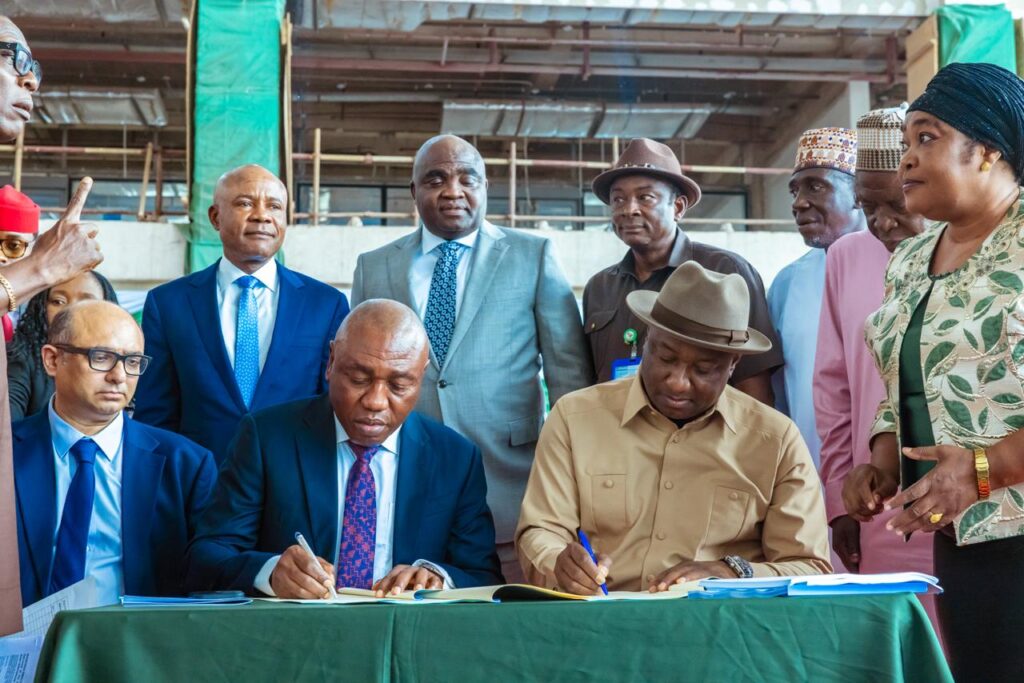
The concession agreement was signed on Thursday at the airport’s new terminal by the Minister of Aviation and Aerospace Development, Festus Keyamo, in the presence of government officials, aviation stakeholders and investors.
Among those at the ceremony were Enugu State Governor, Peter Mbah; the Director-General of the Infrastructure Concession Regulatory Commission (ICRC), Dr. Jobson Oseodion Ewalefoh; representatives of the Ministry of Aviation and Aerospace Development and the Federal Airports Authority of Nigeria (FAAN); and the Managing Director/Chief Executive Officer of Aero Alliance Limited, Saleem Abdulhussain.
The concession is part of the Federal Government’s broader strategy to improve airport infrastructure, enhance operational efficiency and strengthen service delivery through private-sector participation under President Bola Tinubu’s Renewed Hope Agenda.
Speaking at the event, Keyamo described the development as a historic breakthrough, noting that efforts to concession the airport had remained unsuccessful for nearly two decades.
“This concession plan has been on for about 20 years, but it has only become possible under the administration of President Bola Ahmed Tinubu. Before now, investors focused mainly on Lagos, Abuja and Kano airports. Nobody was interested in Enugu and Port Harcourt. Today, Enugu has been successfully concessioned and Port Harcourt will also be handed over within the next few weeks,” he said.
According to the minister, the successful completion of the Enugu concession has already stimulated fresh investor interest in other airports, with bids expected for three additional facilities across the country.
Keyamo credited Governor Mbah’s proactive engagement with investors as a key factor behind the project’s success.
“Governor Peter Mbah came into office with a clear plan. Despite belonging to a different political party, President Bola Ahmed Tinubu directed me to give him every necessary support. He brought investors to the table, and we have found in Governor Peter Mbah the perfect partner for this project”, he stated.
Addressing concerns raised by aviation workers and labour unions, the minister assured employees that their welfare and rights would remain protected under the concession arrangement.
“When we came into office, all aviation labour unions were in court challenging the concession programme. One after another, they have withdrawn their cases after understanding our intentions. I want to assure workers that they are protected. However, it will no longer be business as usual. This airport will now be privately managed with a strong focus on efficiency, accountability and service delivery. Those who perform their duties diligently have nothing to fear”, he said.
Keyamo also challenged Aero Alliance Limited to deliver on its mandate, stressing that its performance would serve as a benchmark for future airport concessions in Nigeria.
The minister further disclosed that the Enugu State Government has signed a Memorandum of Understanding (MoU) to facilitate a direct air link between Guangzhou, China, and Enugu, a move expected to boost trade, tourism and investment opportunities in the South-East.

Following the signing ceremony, operational and management responsibilities for the airport were formally transferred to Aero Alliance Limited.
In his remarks, Governor Mbah described the concession as a transformational step towards positioning Enugu as a leading aviation, logistics and investment hub in West Africa.
He said the initiative aligns with the state’s long-term economic development strategy and would help unlock new opportunities for commerce, connectivity and regional growth.
The concession of Akanu Ibiam International Airport marks the beginning of a new chapter in Nigeria’s airport management framework, with government and private-sector collaboration expected to drive infrastructure upgrades, improve passenger experience and support sustainable growth across the aviation industry.