




A strong call for a shift from survival-driven living to structured, systems-based wealth creation dominated discussions at a wealth creation conference held in Lagos, where experts warned that many Nigerians remain trapped in income cycles that do not translate into lasting prosperity.
The conference, organised by Pyrex Consult in conjunction with the Office of the Special Senior Assistant (SSA) to the Governor on Wealth Creation and Employment, brought together policymakers, financial experts, development practitioners, and private sector stakeholders to examine how structured systems and institutional frameworks can drive sustainable wealth creation.
The first panel, themed “The Role of Structure, Model and System in Wealth Creation and Development”, focused on the absence of long-term financial structures in many individuals’ lives and how this gap continues to fuel economic instability.
Wealth without structure collapses easily
One of the most striking contributions came from the keynote speaker, CEO, Akin Akinpelu Learning & Development Company (AAL&D) and Founder of ERUDIOHUB, Prof. Akin Akinpelu, who delivered an expansive and deeply reflective address on the dangers of unstructured wealth and the urgent need for systems thinking.
Drawing from personal experience, Akinpelu shared the story of his father’s rise from a cleaner in Lagos to an executive in a multinational company, a journey that symbolised resilience and upward mobility. However, he noted that despite years of financial progress, the family’s stability collapsed within a few years due to what he described as “systemic failure and absence of structure”.
According to him, wealth built over time gradually eroded within six years, leading to asset liquidation and financial distress. “People think wealth is about income, but wealth without structure will always collapse”, he said.
From privilege to survival on the streets
Expanding on this experience, Akinpelu recounted how the absence of a sustaining system pushed his family from comfort into survival mode. He spoke of selling ice water and later sachet water (“pure water”) on the streets to survive – an experience that exposed both the resilience required to endure hardship and the fragility of wealth without structure.
While these experiences taught him practical lessons about value, margins, and informal enterprise, he stressed that they also revealed a deeper systemic problem; the lack of deliberate frameworks to preserve and grow wealth across generations.
The hustle cycle problem
Other speakers at the session reinforced this narrative, identifying what they described as the “hustle cycle” as a major barrier to wealth creation. They noted that many individuals continuously earn and spend without building assets, creating an illusion of productivity while remaining financially vulnerable.
Convener and Principal Consultant Pyrex Consult, Dr. Sijuade Balogun, pointed out that putting aside N1,000 daily can make somebody wealthy over time. “Wealth is a culture of discipline and systems”, Balogun stressed.
According to contributors, even high-income earners often struggle to account for their spending, highlighting the absence of financial discipline and structured planning.
Building systems, not just income
Building on these earlier contributions, Akinpelu took the conversation further by challenging participants to fundamentally rethink their approach to wealth creation. He argued that the core problem is not a lack of ideas, but the absence of systems to scale those ideas.
“There is a difference between somebody who is earning and somebody who is building”, he said. “An earner trades time for money, but a builder creates something that works even when they are not there. That is what we call a system, and that is what becomes legacy”.
Using practical illustrations, he explained that while a freelancer may earn income by investing time, true wealth is created when individuals build systems – businesses or platforms that allow others to generate value within a structured framework. Such systems, he noted, multiply impact, expand opportunities, and operate beyond the direct effort of the founder.
Akinpelu emphasised the need to invest in “builders” – individuals who can identify gaps in society and design solutions to fill them. He described Africa, and Nigeria in particular, as a landscape filled with opportunities, noting that “every gap is a potential system waiting to be built”.
He, however, cautioned that societal attitudes often discourage this kind of thinking. “Society will try to scare you out of it. People will say it is risky or unrealistic”, he noted, urging participants to resist such narratives and commit to building solutions despite environmental challenges.
Rethinking wealth and value creation
In a defining moment of his address, Akinpelu described wealth creation as “building a bigger kitchen so that more people can eat”, stressing that true prosperity lies in solving real problems, creating jobs, and expanding opportunities.
“When you create something that employs people, pays people, and expands opportunities, you are no longer just taking from society, you are adding to it”, he said.
He stressed that this requires a shift from self-focused ambition to problem-solving for others, noting that “the river of wealth creation flows from solving real problems”.
Architectural thinking and urgency of action
Central to his message was what he termed “architectural thinking” – the ability to design systems that can grow over decades and outlive their creators. He explained that this mindset is not typically taught in schools but must be developed through mentorship, exposure, and deliberate reorientation.
He highlighted mentorship and exposure as critical tools, noting that a deliberate shift in perspective is necessary to move from survival thinking to system-building.
Akinpelu also underscored the urgency of the moment, pointing out that while developed nations had centuries to build their systems, Nigeria does not have that luxury.
“We don’t have 100 years”, he said. “But we have something powerful – we have opportunities. Africa is full of gaps, and every gap is an opportunity”.
A call to new questions and legacy thinking
Challenging participants to rethink their life approach, Akinpelu posed three critical questions: instead of asking what job to get, individuals should ask how to become essential; instead of focusing only on personal growth, they should build systems that grow without them; and rather than pursuing wealth alone, they should focus on becoming valuable to others.
He noted that at that level of value creation, individuals no longer chase security but become the source of it.
On legacy, he offered a broader perspective: “Legacy is not just what you leave behind, but who you leave behind”, emphasising the importance of building people alongside systems.
From survival to sustainability
In his closing remarks, Akinpelu rejected the notion of survival as a permanent condition, describing it as a “curriculum” that has been passed from generation to generation.
“Survival is not our destiny”, he declared, urging participants to commit to building systems that outlive them, create value, and expand national economic capacity.
The session ended with a strong consensus among participants: Nigeria’s path to sustainable prosperity lies not just in hard work or income generation, but in deliberate system-building, structured thinking, and a collective shift from survival to sustainability.
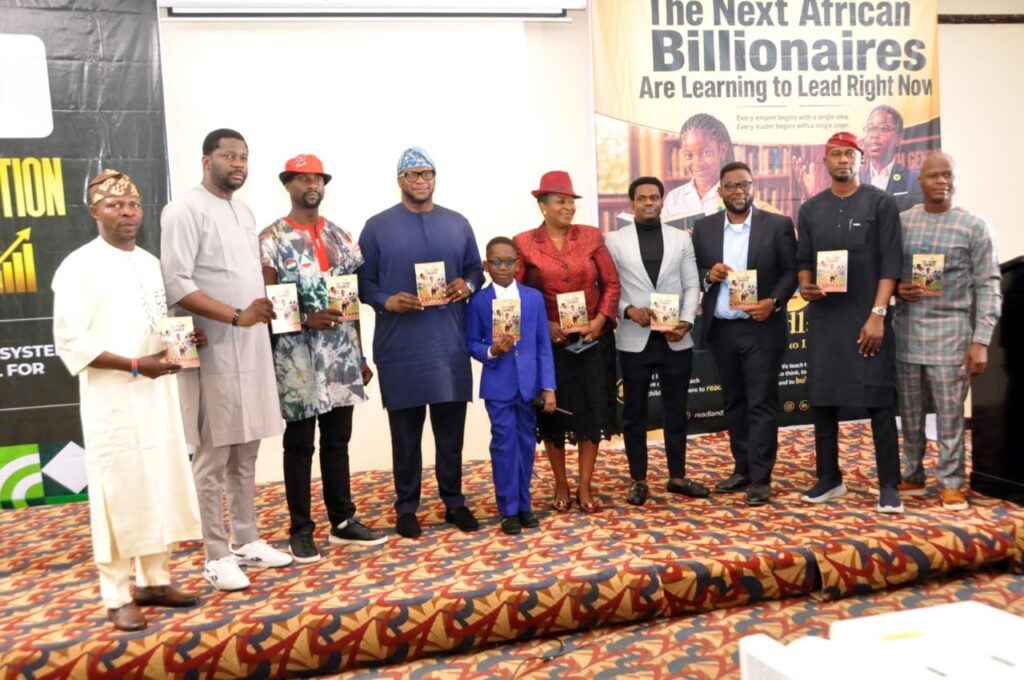
One of the highlights of the conference was the launch of a book – “Young Farmer”, authored by Majolaoluwa Balogun, a nine-year old emerging thought leader with a growing passion for business consulting.