


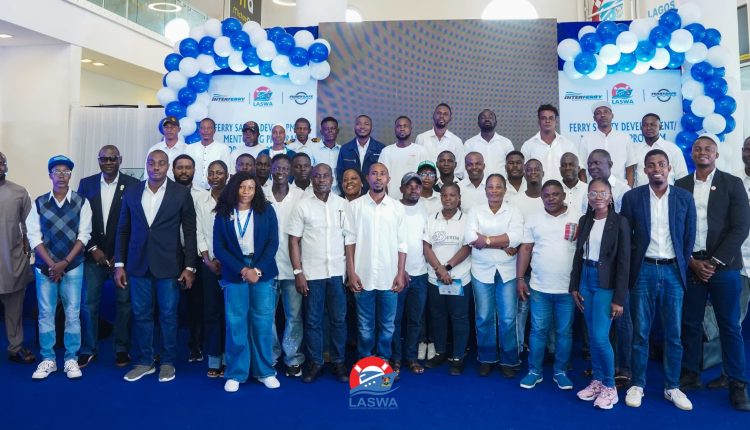
The Lagos State Government has launched Africa’s first-ever Ferry Safety Development and Mentoring Programme, a groundbreaking initiative aimed at strengthening safety standards on inland waterways and positioning Lagos as a leader in maritime innovation across the continent.
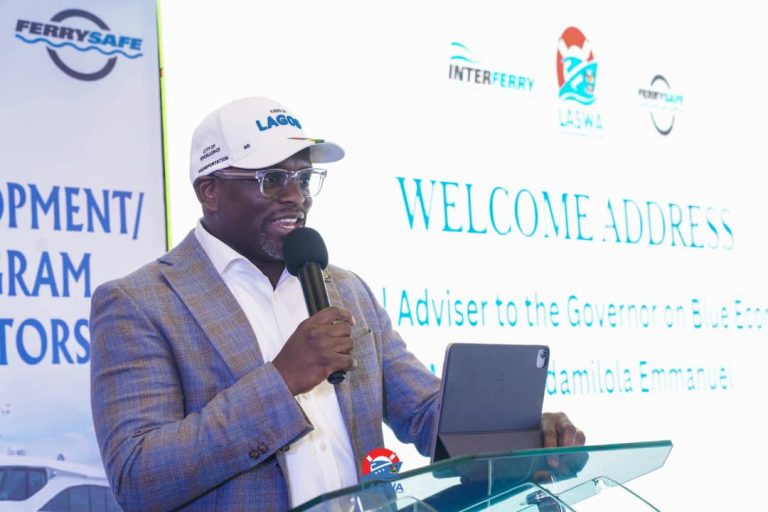
Speaking at the launch on Wednesday, the Special Adviser to the Governor on Blue Economy, Mr. Emmanuel Oluwadamilola, who represented Governor Babajide Sanwo-Olu, described the programme as a major milestone in the state’s drive to build a safer, more efficient and globally competitive water transport system.
The 18-month capacity-building programme, being implemented through the Lagos State Waterways Authority (LASWA), will train 50 selected ferry operators and professionals, including captains, engineers, deckhands and safety officers.
According to the state government, participants will undergo a hybrid training model that combines online classes, practical sessions and mentorship to deepen professionalism and institutionalize a strong culture of safety on Lagos waterways.
The initiative forms a critical part of Lagos State’s broader Blue Economy agenda, which seeks to expand water transportation while ensuring the safety of commuters and operators.
A major highlight of the programme is Lagos State’s partnership with Interferry, a global ferry industry association with consultative status at the International Maritime Organisation (IMO). The collaboration is expected to expose local ferry operators to international best practices and modern operational standards.
“The safety of every passenger on our waterways is non-negotiable”, Oluwadamilola said, stressing that the initiative reflects the Sanwo-Olu administration’s commitment to developing a world-class and secure ferry transportation network.
He charged participants to see themselves as pioneers who would drive transformation in ferry operations, not only in Lagos but across Africa.
With the launch of the mentorship programme, Lagos has further strengthened its position as a pacesetter in maritime development, setting a new benchmark for African cities seeking to modernise and secure their water transport systems.