



The Chairman of the Automotive Local Components Manufacturers Association of Nigeria (ALCMAN), Chief Anselm Ilekuba, has called on the Federal Government to prioritise local component manufacturing, saying it is the foundation for building a globally competitive automotive industry capable of driving industrialisation, creating jobs and reducing dependence on imports.
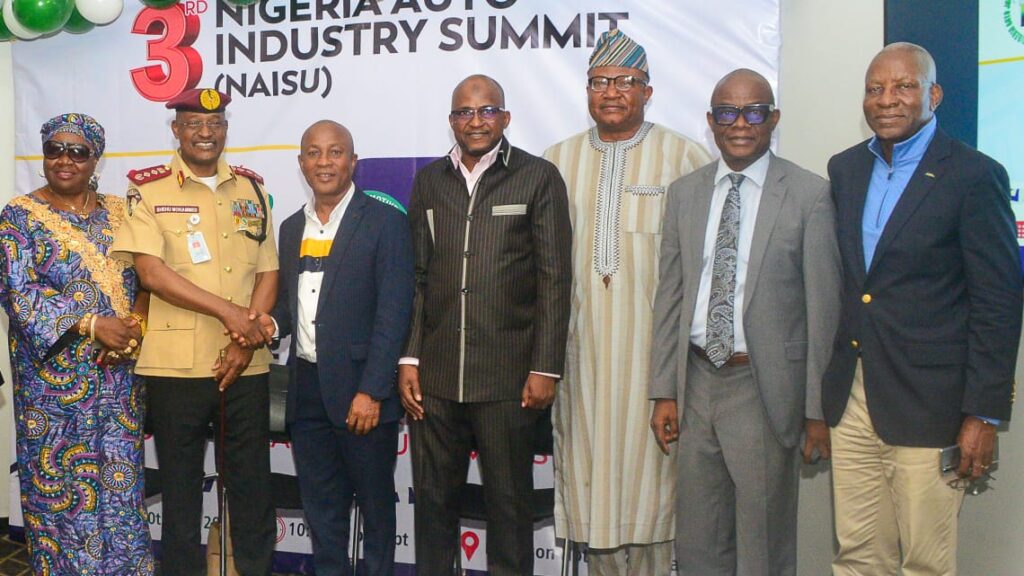
Ilekuba made the call in a goodwill message delivered at the 3rd Nigeria Auto Industry Summit (NAISU 2026), organised by the Nigeria Auto Journalists Association (NAJA) in Lagos.
Speaking on the summit’s theme, “Nigeria’s Clean Mobility Future: The EV and CNG Journey Under the President Bola Tinubu Administration”, Ilekuba described the gathering as timely, noting that Nigeria was at a critical stage where policy decisions would determine whether the automotive sector becomes a major driver of economic growth or remains reliant on imported vehicles and components.
He commended NAJA for sustaining the annual summit, describing it as an important platform for industry dialogue, knowledge sharing and policy advocacy.
According to him, a sustainable automotive industry cannot thrive without a strong local component manufacturing base, stressing that local content should be viewed as the cornerstone of a resilient automotive ecosystem rather than merely an industrial policy objective.
He said every vehicle assembled in Nigeria should increasingly reflect Nigerian engineering, innovation and manufacturing capacity, adding that local component manufacturers possess the expertise and commitment required to support vehicle assembly and strengthen the country’s automotive value chain.
Ilekuba, however, stressed that indigenous manufacturers require a more enabling business environment to unlock their full potential. He identified policy consistency, affordable financing, improved infrastructure, technical skills development, quality assurance, research and development, and stronger market support for locally made products as critical to the sector’s growth.
He urged stakeholders to shift attention beyond vehicle assembly and focus on expanding local value addition by increasing the number of components manufactured in Nigeria, creating employment opportunities, conserving foreign exchange and integrating indigenous firms into the global automotive supply chain.
The ALCMAN chairman also called on the Federal Government and relevant agencies to deepen collaboration between local component manufacturers, vehicle assemblers, Original Equipment Manufacturers (OEMs), fleet operators and other major industry players.
He further advocated stronger implementation of the Nigerian First policy to ensure local manufacturers are given fair opportunities to supply components and compete for contracts where domestic production capacity exists.
Describing the automotive sector as one of Nigeria’s greatest opportunities for economic diversification, Ilekuba said the industry has the capacity to generate millions of direct and indirect jobs, stimulate innovation, develop technical skills and position Nigeria as a leading automotive manufacturing hub in Africa.
He noted, however, that achieving these goals would require coordinated efforts by government, manufacturers, assemblers, dealers, financiers, academia, development partners and the media.
Highlighting the role of the media, Ilekuba said automotive journalists have a responsibility beyond reporting events, noting that responsible journalism can shape public perception, influence policy discussions and draw attention to challenges requiring urgent intervention.
He urged participants at the summit to move beyond discussions and embrace concrete actions that would accelerate the development of Nigeria’s automotive industry.
Reaffirming ALCMAN’s commitment to industry collaboration, Ilekuba said the association would continue to work with government, NAJA and other stakeholders to promote local content and build an automotive sector powered by Nigerian talent and capable of competing globally.
He expressed optimism that the summit would produce practical outcomes that would advance the country’s automotive industry and transform locally manufactured components into the preferred choice for vehicle production in Nigeria.