



Global oil price volatility, a 70 per cent decline in Red Sea shipping activity and a sharp surge in supertanker charter costs have heightened the risks facing Nigeria’s aviation, maritime, road haulage and other transport sectors, Pearl Ngwama, Convener of the Nigeria Transport Summit, has warned.
Ngwama said the figures underline Nigeria’s vulnerability to geopolitical conflicts and disruptions in global energy and maritime trade, stressing the urgent need to integrate the country’s fragmented transportation systems to protect businesses, consumers and the wider economy.
She gave the warning on Friday, October 23, 2026, while delivering her welcome address at the second Nigeria Transport Summit, held at Providence Hotel, GRA, Ikeja, Lagos.
The summit, organised by JustAlive Communications Limited, publishers of JustNet News, had the theme, “Navigating Global Disruptions and the Road Ahead: Mobility, Energy and Trade Facilitation for a Resilient Future”.
Citing figures attributed to the United States Energy Information Administration (EIA), Ngwama said crude oil prices surged to $131 per barrel in mid-September 2026 following attacks on international energy infrastructure.
She also referenced reports by the United Nations Conference on Trade and Development (UNCTAD) and Reuters indicating that shipping activity through the Red Sea remained 70 per cent below 2023 levels, while supertanker charter costs on key international routes had climbed to $81 million from $9.1 million a year earlier.
The figures, she noted, illustrate the scale of external pressures on transportation and supply chains, with consequences extending from fuel and freight charges to passenger fares and the prices of essential goods.
“For the transport industry, the consequences are immediate”, Ngwama said, explaining that airlines face rising aviation fuel bills, shipping companies contend with higher vessel operating and insurance costs, while road haulage operators grapple with increasing fuel expenses.
She added that businesses ultimately bear the burden of higher logistics costs, which can translate into more expensive goods, increased passenger fares and reduced competitiveness.
According to her, Nigeria cannot determine international oil prices or control the outcome of geopolitical conflicts, but it can strengthen domestic infrastructure, improve operational efficiency and implement policies that reduce the transmission of external shocks into the local economy.
Integration Critical to Economic Resilience
Ngwama warned that global disruptions were exposing longstanding structural weaknesses in Nigeria’s transport and logistics systems, particularly the lack of effective coordination among aviation, maritime, rail, road and inland waterways.

She called for an end to isolated policy decisions and fragmented planning, insisting that the country’s various transport modes must function as interconnected components of a national logistics network.
“Nigeria possesses considerable advantages, yet these advantages will remain underutilised unless our transport modes function as parts of an integrated system”, she said.
She explained that seaports could not realise their full economic potential without efficient cargo evacuation, while rail transportation would deliver limited value without effective connections to ports, industrial centres and road networks.
According to the summit convener, a coordinated multimodal transport system would reduce logistics bottlenecks, improve cargo movement and strengthen the country’s capacity to withstand disruptions in international trade.
She also stressed that integration would be essential to Nigeria’s ability to benefit from the African Continental Free Trade Area (AfCFTA), which provides access to a continental market of about 1.3 billion people.
Ngwama cautioned that access to such a vast market would not automatically translate into economic gains if Nigerian producers could not move goods efficiently and competitively across domestic and international supply chains.
Energy, Digitalisation, Policy Stability
Beyond infrastructure development, she identified reliable energy supply, digital cargo tracking and predictable regulation as critical requirements for building a resilient transport sector.
She argued that frequent policy changes, overlapping institutional responsibilities and uncoordinated regulatory decisions could undermine investor confidence and discourage the private capital needed to expand infrastructure and improve service delivery.
For Nigeria to respond effectively to global disruptions, she said, government agencies and private-sector operators must work together to develop practical solutions that address operational challenges across the entire transport value chain.
She emphasised that resilience should go beyond responding to crises after they occur to include anticipating risks, limiting their effects and ensuring that economic activities continue despite external pressures.
“Resilience must mean more than surviving a crisis. It must mean anticipating disruption, absorbing its impact, and recovering without bringing economic activity to a standstill”, she said.
Bi-Courtney Gets Industry Spotlight
A highlight of the summit was the spotlight on Bi-Courtney Aviation Services Limited (BASL), operators of Murtala Muhammed Airport Terminal Two (MMA2), Lagos, in recognition of its pioneering role in private-sector airport concessioning and infrastructure delivery in Nigeria.
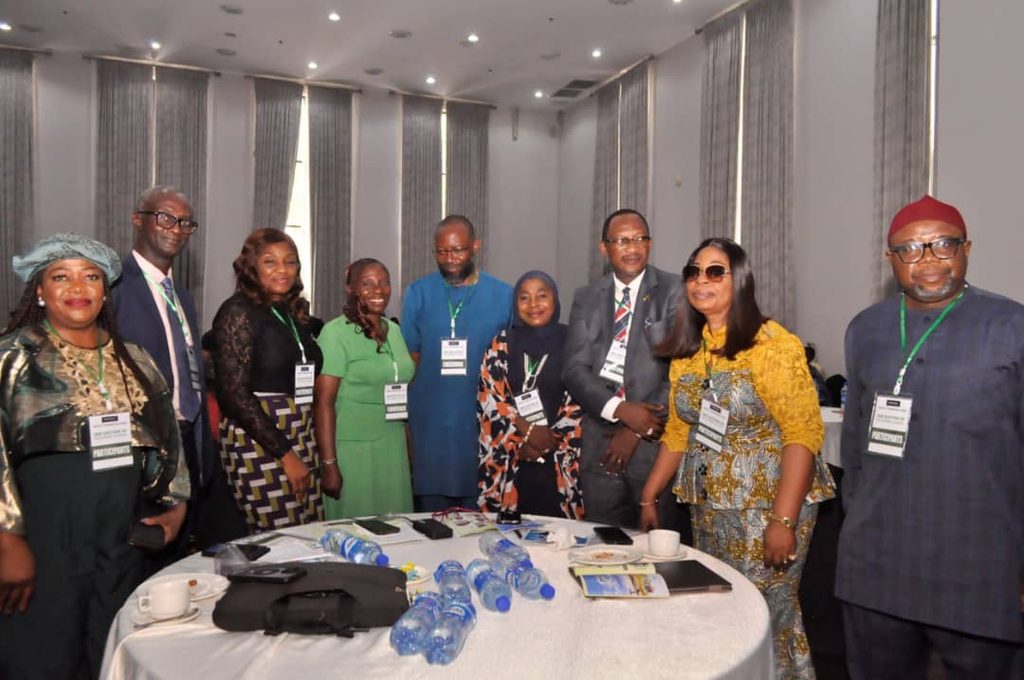
The event brought together key figures from the transportation and allied sectors to deliberate on the challenges confronting the industry and identify pathways to sustainable growth amid global uncertainty.
The summit sought to generate actionable recommendations for strengthening transport infrastructure, improving coordination across transport modes and positioning Nigeria to respond more effectively to global energy and trade disruptions.