

…seeks legislation to drive gender balance across maritime, trade, energy sectors
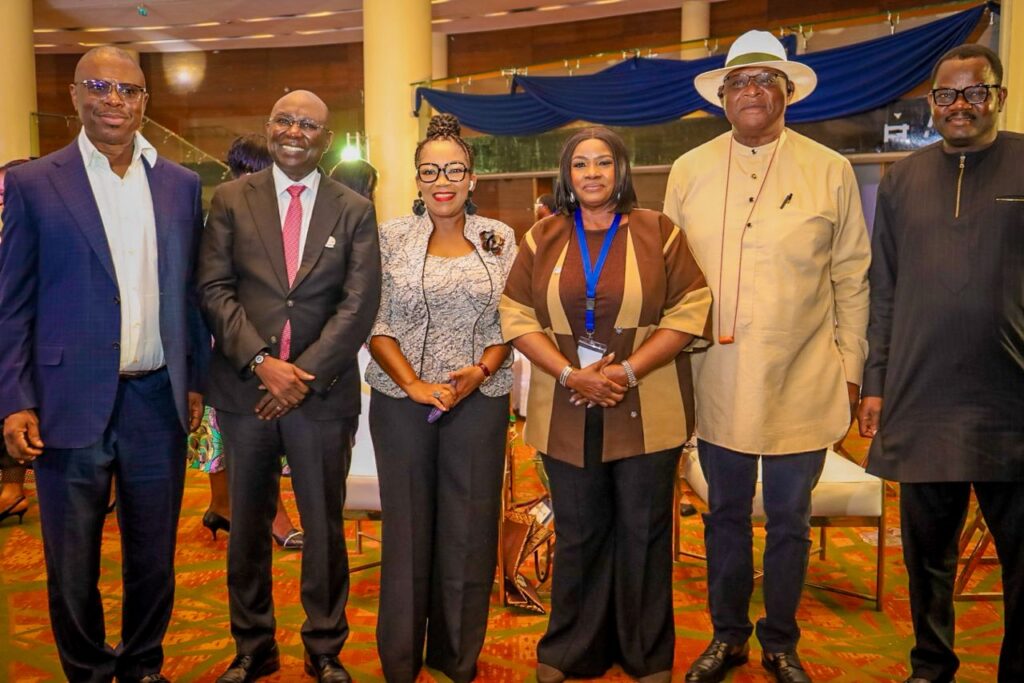
For more than three decades, the Women’s International Shipping & Trading Association (WISTA) Nigeria has championed the cause of women in shipping, logistics, trade and the blue economy through mentorship, capacity building and policy advocacy.
Yet, despite measurable progress, one message resonated louder than any other at the 8th WISTA Africa Regional Conference in Lagos: voluntary commitments are no longer enough.
The consensus among industry leaders was clear as panelists insisted that Africa must move from advocacy to legislation by embedding women’s participation in Local Content policies that compel organisations to deliberately create opportunities for women.
Held at Eko Hotels & Suites, Victoria Island, Lagos, from June 25 to 26, 2026, the conference, themed “From Policy to Progress: Women Delivering Africa’s Shipping and Trade Energy Future”, became a platform for one of the strongest calls yet for gender inclusion backed by law rather than goodwill.
The proposal was both ambitious and practical: every organisation operating within the maritime, shipping, logistics, oil and gas, and related sectors should work towards achieving 50 per cent female representation, beginning with legally enforceable targets of between 20 and 25 per cent from now to next year.
Leading the argument was maritime lawyer and Chair of Zoe Maritime Resources Ltd., Mrs. Oritsematosin Edodo-Emore, who insisted that meaningful inclusion would only happen when governments make it a legal requirement.
According to her, African countries should aspire to ensure women occupy 50 per cent of positions in governance and other sectors.
She said the target could begin with a mandatory threshold of between 20 and 25 per cent, but stressed that such inclusion must be backed by legislation.
Edodo-Emore argued that countries such as Nigeria, Ghana and South Africa could leverage their Local Content legislation to promote greater participation of women in the maritime and related sectors.
Rather than leaving inclusion to corporate discretion, she said regulators should insist that companies meet minimum quotas as part of their operational requirements.
Using Nigeria as an example, she suggested that the Nigerian Ports Authority (NPA) should require shipping companies seeking to do business in the country to demonstrate compliance with prescribed female representation targets, insisting that gender inclusion should become a regulatory requirement rather than a voluntary commitment.
“Our takeaway from this conference should be a Local Content legislation giving women a quota of 50 per cent in every organisation. We can begin with 20 to 25 per cent between this year and next year, but there must be legislation backing it”, she maintained.
Her position reflects a growing global recognition that diversity targets are more effective when supported by legal and policy frameworks rather than voluntary corporate commitments.
Beyond legislation, speakers stressed that women themselves must be prepared to occupy the opportunities such policies would create.
Edodo-Emore observed that increasing numbers of women are distinguishing themselves in maritime law and other technical professions, proving that competence is no longer in doubt.
For her, representation alone is insufficient.
“Women should not just sit in the room; they must make impact in the room”, she declared.
That challenge was reinforced by Managing Director and Chief Executive Officer of Starzs Investments Company Ltd., Ms. Iroghama Ogbeifun, who shifted attention from policy to personal responsibility.
She challenged women occupying leadership positions to ask themselves what they are doing to create opportunities for other women.
“We must all carry the burden that there are women depending on us because of the positions we occupy”, she said.
Ogbeifun admitted she deliberately pushes for female inclusion because she dislikes being the only woman at decision-making tables.
She recalled entering the maritime industry over a decade ago with little technical knowledge despite coming from the founding family of the company.
Instead of relying on privilege, she chose to learn, develop herself and earn the confidence of those she would eventually lead.
Fear, she admitted, was inevitable, but courage proved stronger.
“I told myself I can’t fail”, she said.
Her experience echoed one of the conference’s recurring messages – that confidence, continuous learning and mentorship remain indispensable if women are to fully benefit from future inclusion policies.
The conference also highlighted WISTA Nigeria’s own record as evidence that deliberate investment in women produces results.
Established in 1994, WISTA Nigeria proudly became the first WISTA National Association in Africa, paving the way for the establishment of numerous WISTA National Associations across the continent.
Over 32 years, the association has championed technical training, leadership development, mentorship, scholarship programmes, policy dialogue, youth empowerment and strategic partnerships that have prepared women for leadership across shipping, logistics, transport, trade and energy.
Opening the conference, WISTA Nigeria President, Dr. Odunayo Ani, reminded delegates that Africa’s maritime future cannot be separated from women’s participation.
She noted that the African Continental Free Trade Area (AfCFTA) offers enormous opportunities to strengthen maritime connectivity, regional trade and economic integration, but warned that women must remain central to that transformation.
“If the 21st century will be defined by the Blue Economy, women must help define its direction”, she declared.
Ani said WISTA Nigeria has consistently advocated women’s representation in decision-making while building the skills required for leadership across the maritime value chain.
She urged delegates to move beyond declarations and ensure that policies produce measurable outcomes capable of strengthening economies and improving livelihoods.
According to her, the future of Africa’s maritime industry will ultimately be determined by implementation, innovation and collaboration rather than promises.
That emphasis on implementation was echoed by the Director-General of the Nigerian Maritime Administration and Safety Agency (NIMASA), Dr. Dayo Mobereola during his goodwill message.
He observed that policies alone cannot transform industries.
“The challenge before us is implementation. We must invest in human capital, strengthen institutions, embrace innovation and create enabling environments that promote inclusion and equal opportunities for women and young professionals”, he said.
Similarly, the Oniru of Iruland, Oba Abdulwasiu Omogbolahan Lawal, described the advancement of women as far more than an inclusion agenda.
According to the monarch, empowering women in maritime leadership is both an economic and development imperative capable of producing stronger institutions and more resilient economies.
He noted that Africa is not lacking in policies or ideas. Rather, he argued, the continent’s greatest challenge lies in translating commitments into measurable results.
By the close of the conference, one unmistakable message had emerged.
Africa’s maritime future will not be transformed by conversations alone.
If governments truly desire inclusive growth in shipping, trade, logistics and the blue economy, gender inclusion must become part of national economic policy through enforceable Local Content legislation.
Just as Local Content laws have successfully increased indigenous participation in strategic industries, conference participants believe similar legal frameworks can expand women’s participation, create leadership opportunities and unlock an enormous pool of untapped talent.
The conference concluded with the presentation of Trailblazer Awards to outstanding women whose contributions to maritime development, youth empowerment, business and national development continue to inspire a new generation. The awards celebrated progress already made.
The challenge now, delegates agreed, is ensuring that policy becomes measurable action.