Maritime lawyer identifies gaps in cargo capacity, vessel turnaround, port connectivity, rail evacuation, trade facilitation as major obstacles to Tinubu administration’s economic ambition
Nigeria’s seaports, in their present state, lack the capacity, operational efficiency and regulatory certainty to support the Federal Government’s ambition of building a $1 trillion economy by 2030, a maritime legal practitioner, Barr. Emeka Akabogu, has warned.
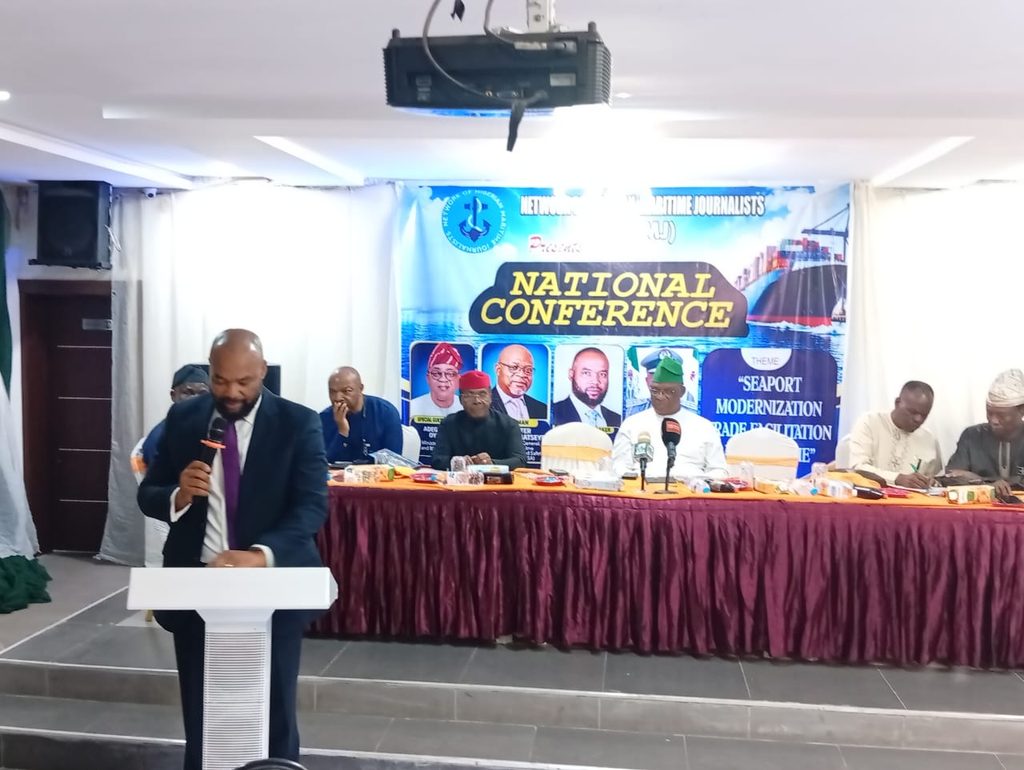
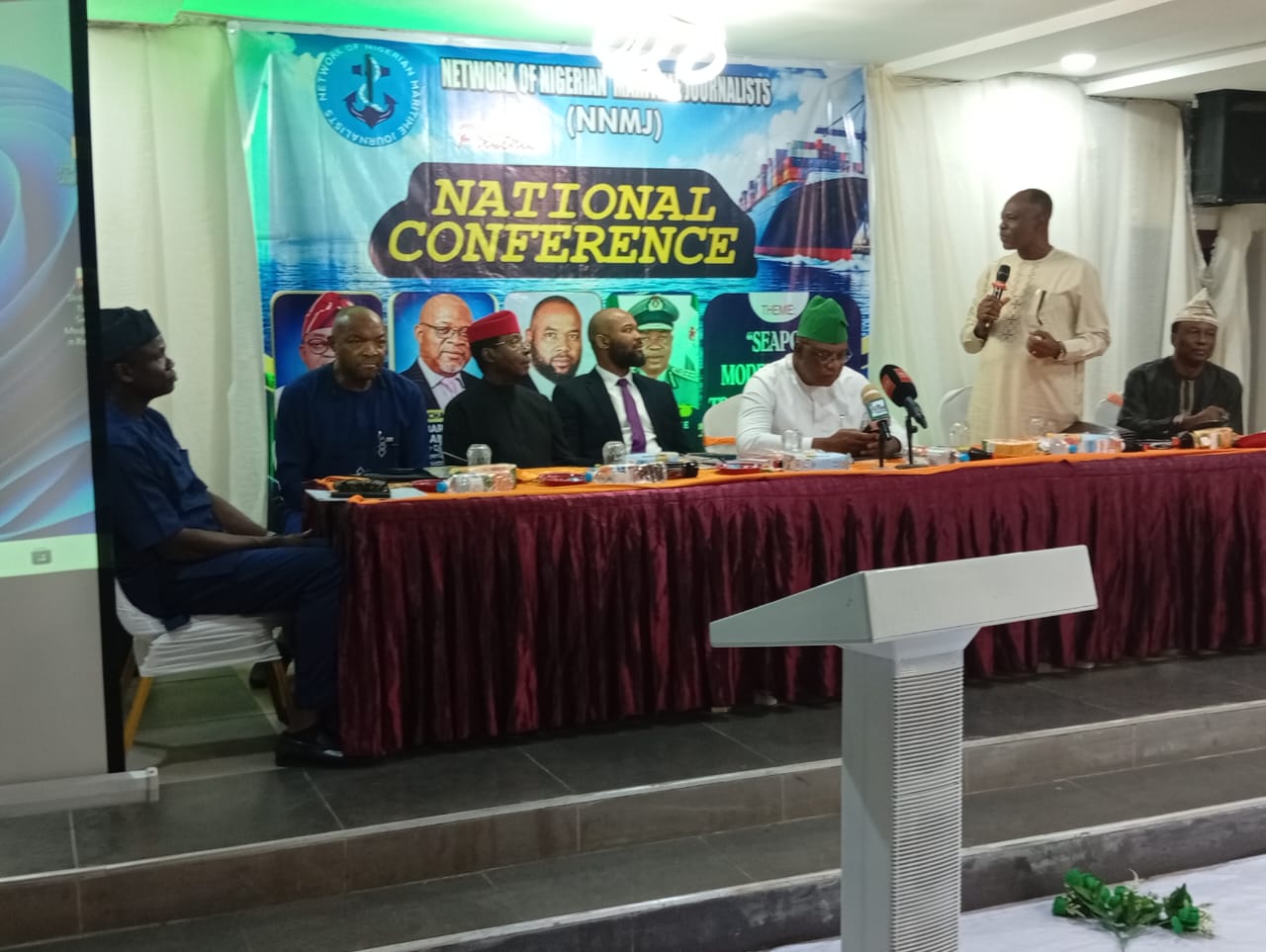
Akabogu, who spoke at the conference of the Network of Nigerian Maritime Journalists (NNMJ) held at Lagos Airport Hotel, Ikeja, Lagos, on Friday November 13, 2026, said the country’s port infrastructure and operational systems required significant transformation to accommodate the volume of cargo, vessel traffic and trade activities that a $1 trillion economy would generate.
Delivering a presentation on Seaports Modernisation, Trade Facilitation and Revenue under President Tinubu’s Administration, the maritime lawyer said Nigeria needed to interrogate the capacity of its ports against measurable economic targets rather than rely on general assessments of government performance.
He challenged stakeholders to examine whether the country’s seaports could provide the infrastructure, efficiency and predictability required to sustain the proposed economic expansion.
“My very honest answer to that question is no. $1 trillion by 2030, as presently constituted, our seaports are unable to carry it’, Akabogu declared.
He explained that the Federal Government’s $1 trillion economic ambition provided a measurable target and timeline against which the country’s infrastructure, trade policies and economic institutions should be evaluated.
According to him, the target requires Nigeria to expand its economic activities substantially, with corresponding increases in imports, exports, cargo volumes and international trade.
Akabogu, however, cautioned that the country’s current economic position made the ambition considerably more challenging than it might have appeared when the target was first announced.
He noted that Nigeria’s GDP, which stood at approximately $647 billion in 2022, declined to about $487 billion in 2023 and $252 billion in 2024, largely reflecting the impact of the naira’s devaluation on its dollar-denominated value.
He put the estimated GDP at about $290 billion in 2025, with a projection of $387 billion for 2026.
According to his analysis, achieving the $1 trillion target by 2030 would require annual economic growth of approximately 26.8 per cent, compared with the country’s recent growth rate of about three per cent and an International Monetary Fund (IMF) projection of nine per cent by 2030.
He said the gap underscored the enormous work required to expand the economy and strengthen the supporting infrastructure, particularly the seaports.
Cargo Capacity: Nigeria Falling Short
Using port performance indicators and comparisons with countries operating economies valued at $1 trillion and above, Akabogu identified container traffic as one of the critical measures of Nigeria’s readiness.
He cited Saudi Arabia, with an economy estimated at approximately $1.4 trillion, as a useful comparison, noting that the country handles about eight million containers annually.
Nigeria, by comparison, handled approximately 1.6 million twenty-foot equivalent units (TEUs) in 2023, 1.75 million in 2024 and 2.1 million in 2025, according to figures from the Nigerian Ports Authority (NPA).
While acknowledging the improvement in container traffic over the period, he said the growth remained insufficient to support the projected economic expansion.
He observed that Nigeria’s container traffic had largely stagnated between one million and 1.3 million TEUs for about a decade before the recent increase.
Although the present growth trajectory could take annual container traffic to approximately 3.6 million TEUs by 2030, Akabogu said the country would need between 5.3 million and 5.5 million TEUs to support a $1 trillion economy.
He also identified a substantial gap in general cargo throughput.
According to the presentation, Nigeria handled approximately 130 million tonnes of cargo in 2025. At the current growth rate, this could rise to about 230 million tonnes by 2030.
However, he estimated that the country would require between 330 million and 442 million tonnes annually to support the envisaged economic expansion.
The lawyer further drew attention to the composition of cargo handled at Nigerian ports, noting that liquid bulk accounted for approximately 54 to 55 per cent, while dry cargo represented about 24 per cent.
He attributed a significant portion of the recent increase in liquid cargo to the growing production and movement of petroleum products from the Dangote Refinery.
He said the development had important implications for the sustainability of port traffic, particularly the need to diversify the sources of cargo growth rather than depend heavily on one major industrial facility.
Vessel Turnaround, Berth Occupancy Under Pressure
Akabogu identified vessel turnaround time as another major weakness that could undermine the competitiveness of Nigerian ports.
He said the average turnaround time, which stood at approximately 4.7 days in 2023 and 4.6 days in 2024, increased to five days in 2025.
At the current trajectory, he projected that it could rise to 6.1 days by 2030, whereas the country should be targeting a maximum of 3.3 days to support efficient port operations.
He explained that prolonged vessel turnaround increases operating costs for shipowners, ultimately affecting the cost of doing business and the prices of goods in the domestic market.
Using the example of a 30,000-tonne vessel, he recalled that the daily operating cost could reach about $70,000 based on the figures available to him in the previous year.
He noted that delays at the ports therefore had direct financial implications for shipping companies and the wider economy.
On berth occupancy, Akabogu said the figure increased from approximately 30 per cent in 2023 to 33 per cent in 2024, with projections indicating that it could reach 50 per cent at the current pace.
He maintained that a minimum berth occupancy level of 80 per cent would be required to accommodate the port activity necessary for the projected economic expansion.
The maritime lawyer also identified inadequate port connectivity and excessive dependence on road transportation as major impediments to trade facilitation.
He explained that port connectivity was not merely about the physical location of seaports but also their accessibility to inland markets, logistics centres and other transportation networks.
According to him, while the connectivity index for Tin Can Island Port was positive, Apapa Port recorded a negative index, while Port Harcourt and Calabar ports had particularly poor connectivity.
He warned that the situation could worsen as cargo volumes increase, especially if the country fails to develop efficient evacuation alternatives.
Akabogu disclosed that approximately 90 per cent of cargo leaving Nigerian ports was transported by road, a situation he described as unsustainable for an economy targeting substantial growth in international trade.
He said the congestion around Apapa and the emerging challenges associated with cargo evacuation from Lekki demonstrated the consequences of depending excessively on road transportation.
“If we proceed at this rate, then the ports, instead of facilitating trade, will become a choke point,” he warned.
He called for greater investment in rail-based cargo evacuation, stressing that the country needed to develop an efficient multimodal transportation system capable of moving cargo from the ports to the hinterland.
He identified a target of between 25 and 30 per cent rail evacuation as necessary for a more balanced and sustainable cargo distribution system.
Non-Oil Exports, Shipping Capacity Need Attention
Akabogu further stressed the importance of expanding non-oil exports, noting that a $1 trillion economy would require substantial improvements in the country’s export capacity.
He said non-oil exports had recorded growth, increasing from approximately 4.2 million tonnes in 2022 to 6.1 million tonnes in 2024.
However, he cautioned that available data from different sources showed significant variations, making it necessary to adopt more conservative projections.
Using estimates from the Nigerian Export Processing Zones Authority (NEPZA), he projected that non-oil exports could reach between 10 million and 13 million tonnes by 2030.
He nevertheless maintained that Nigeria should target approximately 18 million tonnes of non-oil exports to support the $1 trillion economic ambition.
He also raised questions about the capacity of Nigerian-owned ships to participate meaningfully in the country’s expanding international trade, pointing out that the anticipated increase in imports and exports would require adequate shipping capacity.
He argued that the country’s port development strategy must therefore be considered alongside the broader maritime transport and logistics ecosystem.
Akabogu Advocates Data-Driven Port Reform
Beyond the infrastructure gaps, Akabogu emphasised the need for reliable industry data as a foundation for effective planning, policy formulation and performance measurement.
He lamented the poor quality of available statistics on Nigeria’s maritime industry, explaining that his presentation relied on selected estimates from different government agencies and international data sources.
According to him, the absence of comprehensive and consistent maritime statistics makes it difficult to accurately assess the sector’s performance and determine the investments required to improve it.
He said the country needed to move beyond broad policy declarations and establish measurable performance indicators for port modernisation, trade facilitation and revenue generation.
The lawyer maintained that the efficiency of the ports would ultimately determine how effectively Nigeria could translate increased economic activity into trade opportunities, employment, investment and government revenue.
Earlier in his remarks, Akabogu congratulated the Network of Nigerian Maritime Journalists on the establishment of the coalition, describing it as a significant milestone for maritime journalism in Nigeria.
He said the coalition had the potential to harness the collective strength of maritime journalists and set an example for other industry stakeholders to emulate.
However, he urged the Network to establish a clear code of standards and practice to guide membership, professional conduct and continued participation.
With more than 200 members, he said the organisation needed to establish minimum requirements for admission and continued membership to ensure that its growing numbers reflected professional credibility and shared standards.
He stressed that professional standards were important in determining the quality, credibility and long-term value of the association.
Akabogu’s central message was that Nigeria’s $1 trillion economic ambition must be matched by a deliberate transformation of its seaports, shipping capacity and logistics infrastructure.
For him, the challenge is not simply to increase cargo throughput or expand port facilities, but to build an efficient, connected and predictable maritime system capable of supporting the scale of trade required to grow the Nigerian economy.
Until that transformation takes place, he warned, the country’s seaports risk becoming constraints rather than catalysts for economic growth.
Pearl Ngwama is a prominent Nigerian media professional, an advocate of Nigeria Transport Sector development and Managing Director of JustAlive Communications Ltd, publishers of JustNet News.
She is the convener of the annual Nigeria Transport Summit.