



The Nigerian Meteorological Agency (NiMet) has entered into a strategic data-sharing partnership with the Central Bank of Nigeria (CBN), marking a significant step toward strengthening evidence-based economic policymaking in the country.
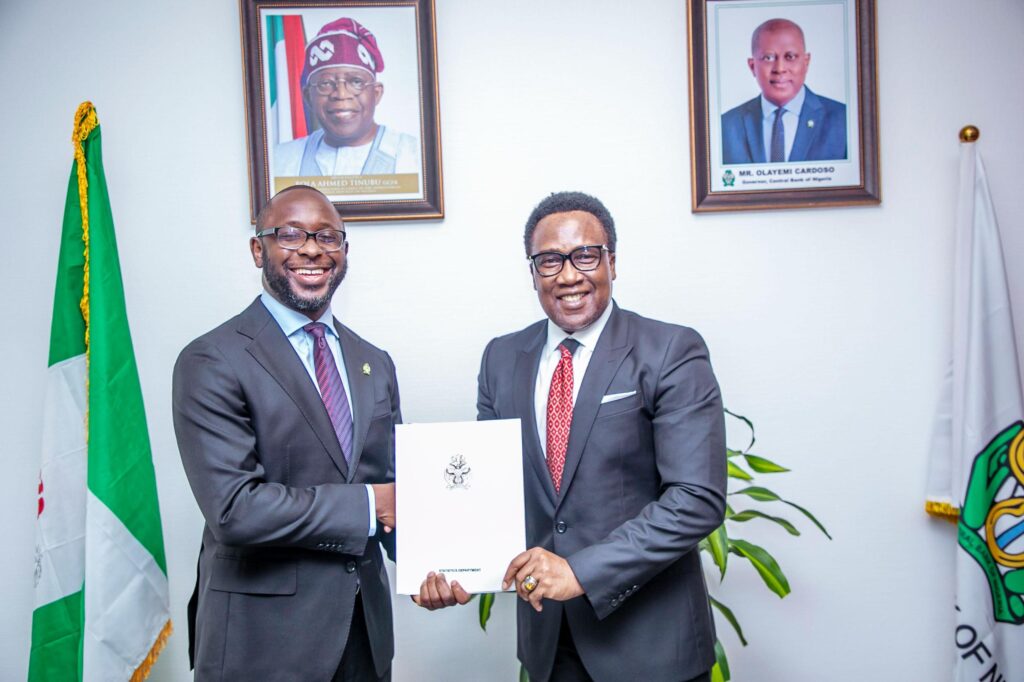
The agreement, formalised through a Memorandum of Understanding (MoU), was signed at the CBN Headquarters in Abuja on Wednesday, May 13, 2026, by NiMet’s Director General and CEO, Prof. Charles Anosike, and the CBN’s Deputy Governor for Economic Policy, Muhammad Sani Abdullahi.
Speaking at the signing ceremony, Anosike underscored the growing importance of integrating meteorological data into economic planning. He emphasised that sectors such as agriculture, energy, and transportation are increasingly vulnerable to climate variability, noting that extreme weather conditions continue to threaten food production and overall economic stability.
He added that the collaboration aligns with the policy direction of Bola Ahmed Tinubu under the Renewed Hope Agenda, which prioritises food security through large-scale agricultural investments, including the cultivation of 10 million hectares of land and deployment of mechanized farming equipment.
Citing global data, Anosike referenced recent findings by the World Bank indicating that climate-induced extreme weather is worsening food insecurity, with over 87 million people affected in East and Southern Africa, and 52 million in West and Central Africa. He also pointed to projections by Berkeley Earth suggesting that 2026 could rank among the warmest years on record, further underscoring the urgency of climate-informed economic forecasting.
In his remarks, Abdullahi described the MoU as a timely and strategic move that reinforces collaboration between two critical national institutions. He stressed that in today’s complex economic environment, access to accurate and timely data is indispensable for sound policymaking.
According to him, the CBN’s Economic Policy Directorate depends heavily on credible meteorological data from NiMet for key functions such as inflation tracking, agricultural output assessment, and broader economic advisory services. He noted that the partnership would enhance the quality of national data systems and strengthen Nigeria’s capacity for data-driven decision-making.
The event concluded with the formal signing of the MoU, signaling a new phase of institutional cooperation aimed at integrating climate intelligence into Nigeria’s economic framework.