


Nigeria is set to tap into a €59 million funding window under the West Africa Sustainable Ocean Programme (WASOP) as part of renewed efforts to combat illegal, unreported and unregulated (IUU) fishing and strengthen sustainable management of its marine resources.
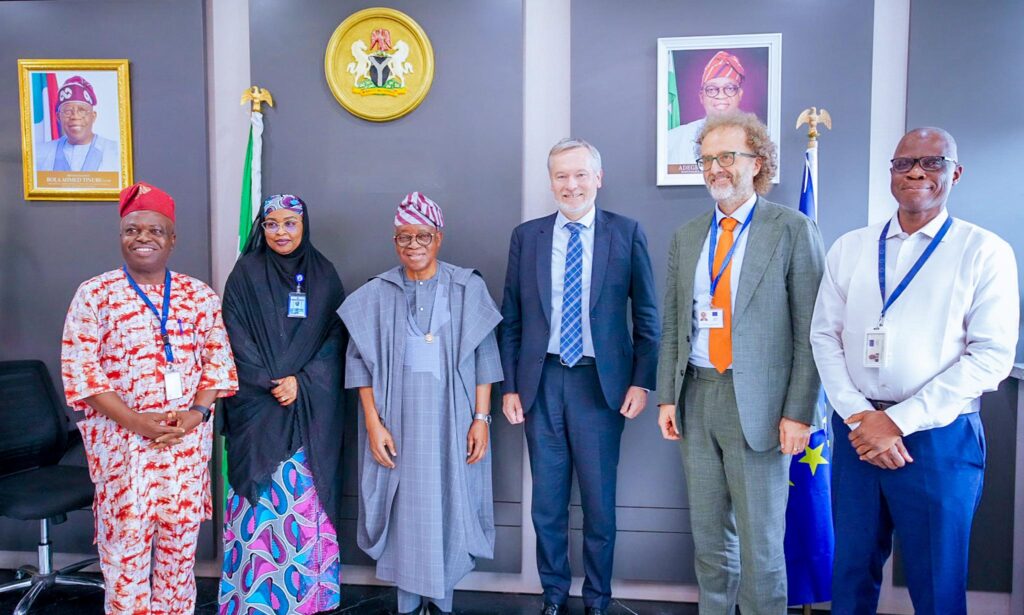
The Minister of Marine and Blue Economy, Adegboyega Oyetola, disclosed this in Abuja during a high-level meeting with the European Union Ambassador to Nigeria, Gautier Mignot, where both parties reaffirmed their commitment to deepening collaboration on maritime security and ocean governance.
Welcoming the EU envoy, the Minister commended the European Union for its longstanding partnership with Nigeria, particularly its support in enhancing maritime stability within the Gulf of Guinea, an area of strategic importance to global shipping and regional economic growth.
Oyetola described WASOP as a critical platform for coordinated regional action against illegal fishing, noting that the initiative offers a timely opportunity to strengthen ocean governance frameworks and promote sustainable utilisation of marine resources across West Africa. He emphasised Nigeria’s readiness to fully engage the programme to unlock both technical and financial support in advancing its blue economy agenda.
He warned that illegal fishing continues to pose a serious threat to marine ecosystems and coastal livelihoods, depleting fish stocks, undermining food security, and weakening the economic resilience of coastal communities.
“Illegal, unreported, and unregulated fishing is a direct threat to national security, food sovereignty, and the survival of our coastal communities”, the Minister said. “We must intensify international collaboration, backed by robust monitoring systems and uncompromising enforcement, to dismantle these illicit activities and safeguard our waters”.
The Minister further highlighted ongoing reforms under Nigeria’s National Policy on Marine and Blue Economy, which prioritises innovation, private sector participation, and sustainable exploitation of ocean resources. He pointed to improvements in port operations, logistics efficiency, and maritime security, alongside efforts to expand infrastructure and enhance Nigeria’s competitiveness in global trade.
He also called for broader international cooperation beyond piracy control, urging development partners to support Nigeria in tackling environmental crimes, human trafficking, and illegal fishing through a more integrated approach.
Oyetola specifically requested increased EU support in surveillance technologies, fisheries monitoring systems, and enforcement capacity to strengthen Nigeria’s response to IUU fishing across the Gulf of Guinea.
In his remarks, Ambassador Mignot reaffirmed the European Union’s commitment to supporting Nigeria and the wider region in building safer and more sustainable oceans. He highlighted WASOP as a flagship EU-funded initiative aimed at promoting integrated ocean governance, sustainable fisheries management, and the protection ofq marine ecosystems across West Africa.
According to him, the programme will enhance coordination among coastal states, strengthen enforcement frameworks, and foster a more inclusive and sustainable blue economy across the region.