


…UNA, ValueJet fault one-sided disruption data as MM2 weighs staggered flight slots
Nigerian airline operators have rejected the Nigerian Civil Aviation Authority’s (NCAA) attribution of more than 60 per cent domestic flight delays in August 2026 to the industry, arguing that the figure does not distinguish between disruptions within airlines’ control and those caused by external factors.
The operators said airport congestion, inadequate infrastructure and adverse weather were among the major causes of flight delays and cancellations, insisting that airlines should not be held responsible for disruptions arising from conditions they cannot control.
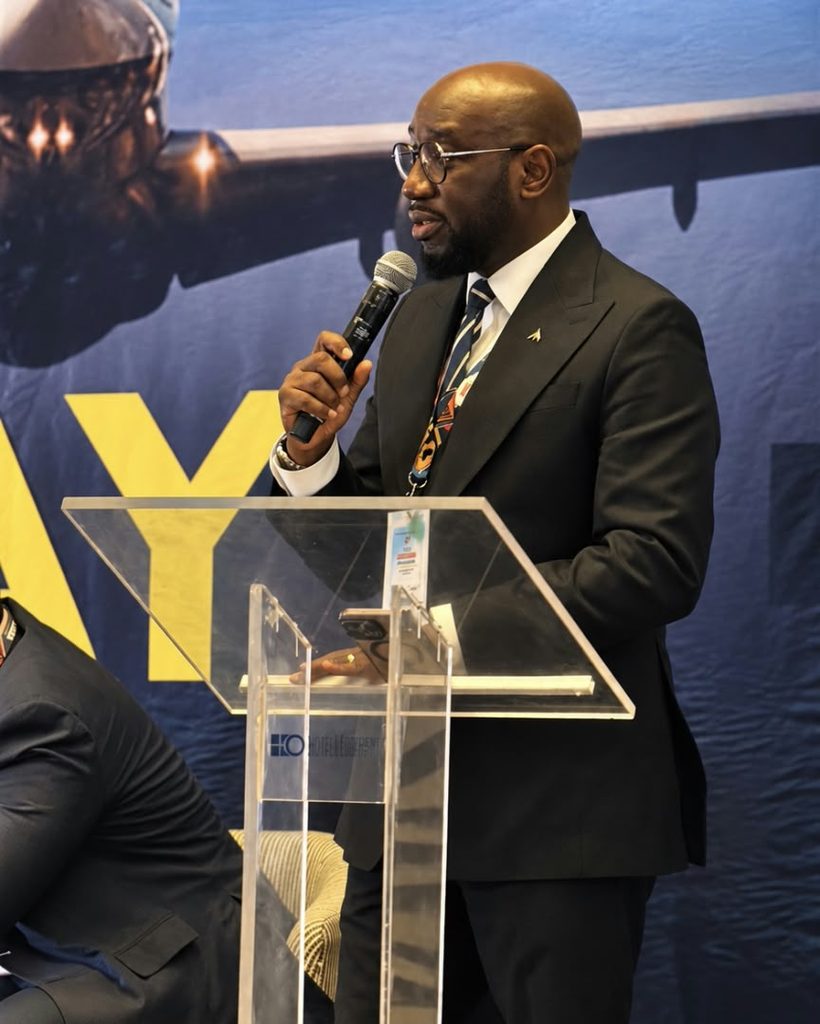
Chief Commercial Officer of United Nigeria Airlines (UNA), Adedayo Olawuyi, made the position known on Tuesday during the Aviation Day of the 22nd Akwaaba African Travel Market in Lagos.
The session, themed “Delayed and Cancelled Flights: The Rules and the Rights of Passengers – The Airline Perspective”, brought together stakeholders to examine the causes of flight disruptions and the obligations of airlines to passengers.
Olawuyi, who was one of the panelists, said while airlines accepted responsibility for delays within their control, the industry needed to take a broader look at the factors contributing to the high disruption rate.
He specifically faulted the presentation of the NCAA’s August statistics, saying the data should have separated controllable delays from those caused by circumstances beyond the airlines.
“I will use an analogy. You go to school and 60 per cent of the students fail, is that the fault of the school”? he asked.
According to him, the 60 per cent figure could only reasonably be attributed to airlines after uncontrollable delays had been removed.
“When you remove the controllable delays and you have a high number of 60 per cent, then you can say the problem is the airlines”, he said.
Olawuyi maintained that responsibility for flight disruptions should be examined across the aviation ecosystem, including airlines, airports, regulators and other service providers.
“The question about the reason for the delays should not be directed to the airlines. The question should be directed to all stakeholders”, he said.
Airport Congestion Takes Its Toll
Olawuyi identified airport congestion as one of the most significant challenges affecting flight schedules, particularly during peak operating periods.
He likened the situation to living in a five-bedroom apartment with only one parking space, where vehicles could block one another from moving.
According to him, airlines sometimes encounter a similar situation on airport ramps, where several operators are attempting to move aircraft at virtually the same time.
He cited an instance where an aircraft pushed back at 6:59 a.m. but did not take off until 7:38 a.m., creating a 40-minute delay before the aircraft had even left the airport.
“The flight was supposed to arrive in Abuja by 8 a.m., but there’s already a 40-minute delay that the airline knows nothing about”, he said.
He stressed that airlines did not deliberately delay flights, noting that technical problems and weather conditions could also disrupt schedules.
“Airlines don’t want to intentionally delay flights but the challenges we face are what bring about these delays”, he said.
Weather, Airport Infrastructure
Compound Delays
Olawuyi said weather remained another major source of disruption, particularly when adverse conditions affected airports with limited night-operating capabilities.
He recalled a recent UNA flight scheduled to depart Lagos for Kano at 8 p.m. which was delayed because of bad weather in Kano and eventually departed at about 10:30 p.m.
Although the aircraft flew to Kano, a thunderstorm subsequently affected the runway lighting system, making it impossible for the aircraft to land.
The aircraft was forced to return to Lagos, where it eventually landed at about 1 a.m., leaving passengers to disembark.
“That’s not the fault of the airline”, Olawuyi said.
He noted that many Nigerian airports operate on a dusk-to-dawn basis, with limited or no capability for night operations.
“When you have delays from every other reason that extend into the night, sometimes we are forced to cancel”, he said.
He added that technical problems were another unavoidable operational reality, but stressed that safety must always take precedence.
“When these technical challenges occur, we must maintain the safety of that flight and ensure that everything is properly done and that the aircraft is fixed before it is released into service”,he said.
ValueJet Backs UNA
Chief Commercial Officer of ValueJet, Trevor Henry, another panelist, supported Olawuyi’s position, identifying several operational factors that could contribute to delays and cancellations.
Henry listed presidential movements, adverse weather, congestion at check-in points, security screening, boarding lounges and gates among the factors affecting flight schedules.
He said congestion could also occur after passengers had boarded, particularly around taxiways and runways during the busy morning period.
“When the aircraft taxis to the runway, especially in the morning, there can also be congestion from the taxiway to the runway before takeoff”, he said.
MM2 Proposes Staggered Flight Slots
The Chief Operating Officer of Murtala Muhammed Airport Terminal Two (MM2), Remi Jibodu, meanwhile, proposed a coordinated slot system to ease congestion and improve the flow of aircraft and passengers at the airport.
Jibodu said the concentration of thousands of passengers and multiple airlines around the same departure periods, particularly 7 a.m., created significant pressure on airport facilities.
He noted that more than 10 airlines could have flights scheduled around the same time in the morning, making delays almost inevitable.
“What we can do at that point in time is to have a coordinated system, which means that we have to collaborate with the airlines to say instead of having everybody going out at 7 o’clock, can we stagger it a little bit”? he said.
According to him, a full slot system may not be immediately necessary, but some form of coordinated scheduling could help distribute traffic and reduce congestion.
“The truth is that at this point, we have to look at the slot system to see how we can coordinate it. It may not be a full slot system, but we must be able to give a little bit of concession to that”, he said.
Airlines Reaffirm Passenger Rights
While defending airlines against delays caused by external factors, Olawuyi acknowledged that passengers have rights which airlines must respect where disruptions fall within their responsibility.
He said passengers should receive refreshments where a flight delay lasts up to two hours, a full meal where the delay extends to four hours, and compensation in applicable circumstances where the delay reaches six hours.
Olawuyi also urged passengers to play their part by arriving at the airport on time, checking messages and flight updates, using online check-in where available and remaining calm when disruptions occur.
On cancellations, he said airlines could be required to provide accommodation and transportation in certain circumstances, particularly where the disruption was attributable to the carrier.
He said that where a flight was cancelled after 10 p.m., accommodation and transportation should be provided where the airline was responsible for the cancellation.
However, he stressed that airlines could not automatically be held liable for disruptions caused by circumstances beyond their control.
He said that, as a matter of duty of care, an airline could nevertheless assist passengers even when it was not legally responsible for a disruption.
“For instance, if you are based in Lagos and have a flight out of Lagos, and your flight is cancelled, we tell you that you can go back home, and we give you an alternative flight”, he said.
The discussions highlighted the need for a broader industry-wide approach to Nigeria’s persistent flight disruptions, with stakeholders pointing to airport congestion, infrastructure limitations, weather, operational coordination and the need for clearer accountability across the aviation value chain.