


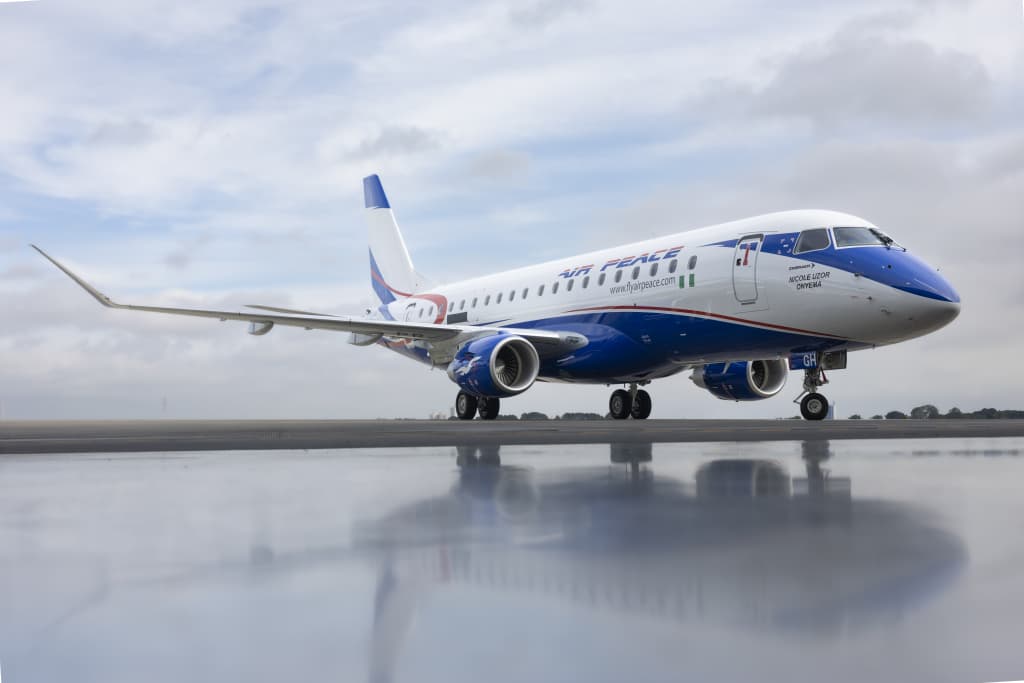
Air Peace has challenged the Nigeria Civil Aviation Authority’s (NCAA) August 2026 flight disruption report, disputing the regulator’s figures on its operations and saying the majority of the delays recorded during the month were caused by factors outside the airline’s control.
The airline also alleged that the NCAA’s report omitted more than 700 of its flights, arguing that the discrepancy distorted its reported performance and created an inaccurate picture of its operational reliability.
In a statement signed by its Chief Operating Officer, Oluwatoyin Olajide, Air Peace said it operated 2,564 flights in August, compared with the 1,864 flights attributed to it in the NCAA report.
The NCAA’s August summary had reported that Air Peace recorded 1,330 delayed flights out of 1,864 operations, representing a 71.4 per cent delay rate.
The regulator’s overall report showed that 15 domestic carriers operated 7,961 flights during the month, of which 4,765 were delayed and 36 cancelled.
Air Peace, however, said the reported operational volume did not reflect its actual activities during the month.
“Air Peace operated a total of 2,564 flights in August 2026, as opposed to the 1,864 flights stated in the NCAA report”, Olajide said.
According to her, the omission of more than 700 flights from the data pool affected the calculation of the airline’s performance metrics and inflated the reported delay percentage.
The airline also questioned why the NCAA commenced its monthly disruption series with August, rather than July, following the publication of its first- and second-quarter reports on July 31.
Air Peace further raised concerns about the timing of the August report, saying there was no equivalent monthly data for July while the August figures were published shortly after the end of the month.
Air Peace Attributes Delays to External Factors
Beyond the disputed flight volume, Air Peace said the NCAA report did not adequately distinguish between delays arising from internal airline operations and those caused by external circumstances.
The airline said its internal review showed that only 391 delays, representing about 15 per cent of the disruptions recorded in August, were attributable to internal operational factors.
It said the internally driven delays were largely linked to technical issues requiring unscheduled aircraft maintenance and fuel-related challenges.
The carrier attributed the majority of its disruptions to external factors, including airport congestion, infrastructure limitations, adverse weather, bird strikes, industrial action and damage to one of its aircraft by a ground-handling company.
According to the airline, airport congestion and traffic accounted for more than 51 per cent of its external delays, with aircraft frequently held on the ground or in holding patterns because of infrastructure and capacity constraints.
Air Peace also cited adverse weather as another major source of disruption, saying unfavourable weather conditions during the rainy season resulted in mandatory safety holds and diversions.
The airline explained that a diversion could generate several hours of consequential delays as aircraft and crew schedules were affected.
It added that it continued to provide support to affected passengers, including hotel accommodation, even where disruptions resulted from circumstances beyond its control.
Bird Strike Grounds Aircraft
Air Peace also highlighted the impact of bird strikes on its operations, citing an incident involving its aircraft, 5N-BYG, in Abuja.
According to the airline, the aircraft sustained damage to its inlet cowl after a bird strike and had to be removed from service for more than a week while the damaged component was replaced.
It put the cost of repairing the aircraft at about $1.8 million, adding that the aircraft normally operated a minimum of eight sectors daily and transported about 1,000 passengers.
The airline said the grounding consequently affected its flight rotations and contributed to wider operational disruptions.
Air Peace also cited an “unprecedented” picketing of the airline by aviation unions, which it said disrupted operations for more than 14 days, as well as damage to another aircraft by a ground-handling company that reportedly kept the aircraft out of active service for more than 14 days.
Airline Seeks NCAA Data Review
Air Peace said it had refrained from publicly responding to the NCAA figures until now but decided to make its position known because of what it described as the need to correct the public narrative surrounding its August operations.
The airline maintained that it had continued to invest in fleet expansion, crew availability, training and aircraft maintenance, while emphasising its commitment to safety, on-time performance and passenger satisfaction.
It, however, said airlines could not independently eliminate disruptions caused by airport congestion, inadequate infrastructure, weather conditions and other systemic constraints.
“We will continue to optimise our internal processes to mitigate against all the internal delay drivers”, the airline said.
Air Peace urged the NCAA to review and audit its data-collection methodology to ensure that future disruption reports accurately capture airlines’ operational volumes and distinguish between internal causes and external factors.
The dispute over the August figures comes after the NCAA’s release of its monthly disruption data, which generated widespread reporting on delays across the domestic aviation sector.
The regulator’s published figures and Air Peace’s operational records therefore remain materially different on the number of flights attributed to the carrier.